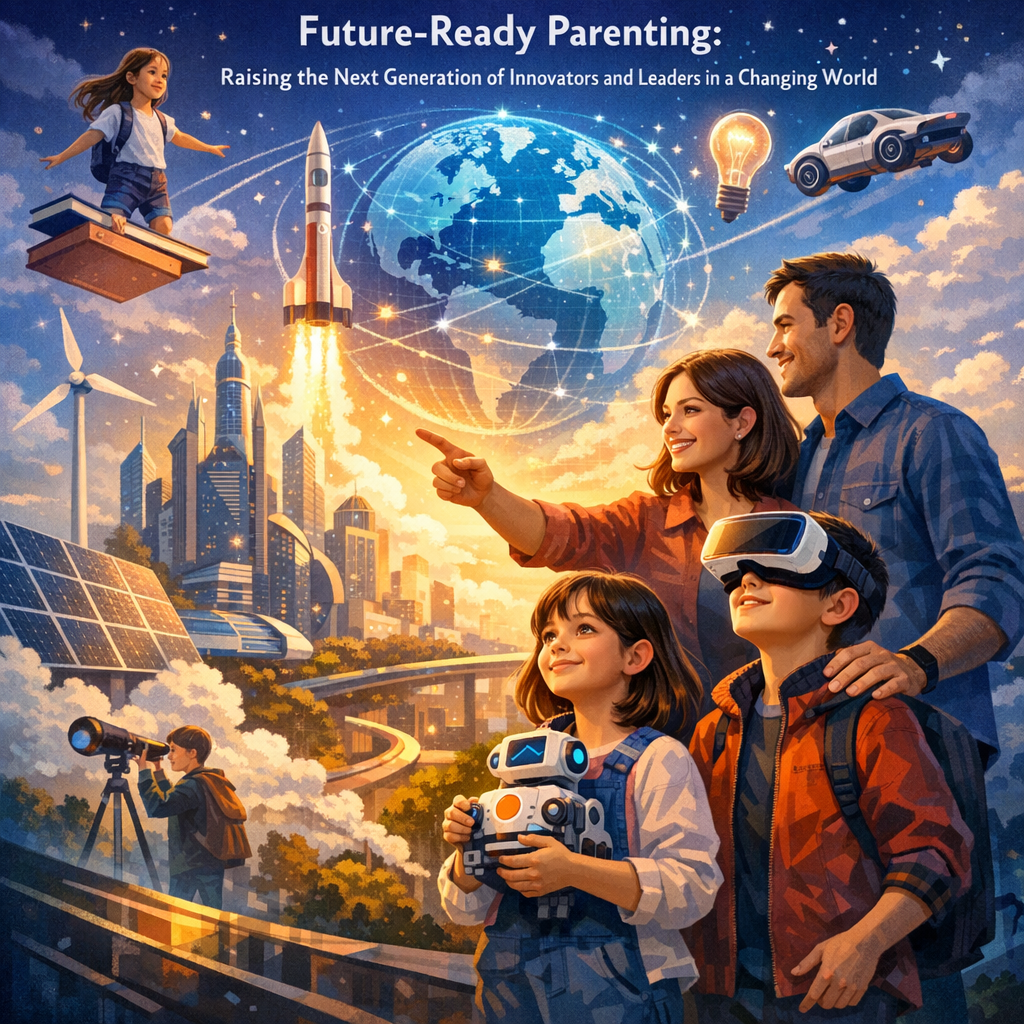
Future-Ready Parenting: Raising the Next Generation of Innovators and Leaders in a Changing World
In today’s rapidly evolving world, the dynamics of parenting have shifted dramatically. The quest for equipping children with the tools they need to become tomorrow’s leaders and innovators is more crucial than ever. As technology redefines every aspect of our lives, from how we communicate to how we work, parents of means are uniquely positioned to provide their children with opportunities that foster innovation and leadership. However, this task demands a forward-thinking approach that goes beyond traditional parenting.
At the heart of future-ready parenting lies the integration of critical thinking, adaptability, and emotional intelligence. The environment young minds grow in today will determine their readiness to tackle the uncertainties of tomorrow. With automation and artificial intelligence rapidly altering the landscape of jobs, the skills children develop now need to be versatile and future-proof. Parents must therefore focus on providing an education that not only emphasizes STEM (Science, Technology, Engineering, and Mathematics) but also incorporates creativity and learning agility. Additionally, incorporating arts and humanities into their education can enhance their ability to think outside the box and view problems from multiple perspectives, further strengthening their problem-solving skills.
Moreover, nurturing a global mindset is of paramount importance. Today’s children are digital natives, with the world at their fingertips. Understanding diverse cultures and viewpoints will give them a competitive edge in a connected world. This can be facilitated through experiences such as international travel, bilingual education, and digital exchanges. Educators and experts agree that experiential learning is a powerful tool in nurturing leadership. Schools worldwide have started implementing project-based learning frameworks akin to real-world problem-solving, a trend parents of means can supplement with extracurricular programs and mentors in fields of interest. Incorporating community service and volunteer work can also provide practical exposure to different social structures and challenges.
Equally critical is the fostering of mental resilience and well-being. The challenges of the modern world, including climate change, socioeconomic upheaval, and pandemics, require children to possess inner strength and a positive mindset. Parents should encourage practices such as mindfulness, stress management, and healthy digital habits. Mental health support and counseling should be considered essential components of a child’s development plan. Regular family discussions about emotions and daily reflections can further help in building emotional resilience.
Features:
Importantly, numerous studies highlight the significance of an integrated approach to developing future leaders. According to the World Economic Forum’s [Future of Jobs Report](https://www.weforum.org/reports/the-future-of-jobs-report-2020), the top skills for the future include analytical thinking and innovation, complex problem-solving, and emotional intelligence. These insights underscore the necessity for parents to encourage their children to think critically and empathetically.
Another relevant study by the Harvard Graduate School of Education emphasizes the importance of “Deeper Learning,” which focuses on applying knowledge to real-world challenges [Harvard Graduate School of Education](https://www.gse.harvard.edu/news/uk/16/03/how-do-we-develop-world-class-students). This approach fosters capabilities such as leadership, creativity, and collaboration. It suggests that children learn best through hands-on experiences and project-based learning, methodologies that parents can actively support through engaging home projects and community activities.
Research from the Yale Center for Emotional Intelligence also reiterates the importance of emotional intelligence [Yale Center for Emotional Intelligence](https://www.ycei.org/). As technology becomes more embedded in daily life, the ability to understand and manage emotions, both personal and others’, has become a defining trait in successful leaders. Schools integrating emotional intelligence into their curricula tend to produce students who thrive both academically and socially.
The American Academy of Pediatrics (AAP) provides guidelines on maintaining children’s mental health in the digital age [AAP](https://pediatrics.aappublications.org/content/138/5/e20162593). It stresses the need for controlled exposure to digital devices, promoting balanced activities that include physical, cognitive, and social engagements. These practices are vital as they help in developing a child’s resilience and adaptability.
Conclusion:
In conclusion, parenting the next generation of leaders in a changing world requires a conscious, multifaceted approach. By providing enriching experiences, encouraging emotional and analytical prowess, and promoting a balanced lifestyle, parents can equip their children with the skills necessary to thrive amidst uncertainty. Cultivating an environment that values lifelong learning and adaptability will be the cornerstone of raising innovators and leaders who are not only successful but also empathetic contributors to society. Encouraging engagement with emerging technologies and participation in innovation challenges or tech clubs can further sharpen their skills and prepare them for future demands.

Dominic E. is a passionate filmmaker navigating the exciting intersection of art and science. By day, he delves into the complexities of the human body as a full-time medical writer, meticulously translating intricate medical concepts into accessible and engaging narratives. By night, he explores the boundless realm of cinematic storytelling, crafting narratives that evoke emotion and challenge perspectives. Film Student and Full-time Medical Writer for ContentVendor.com