“`html
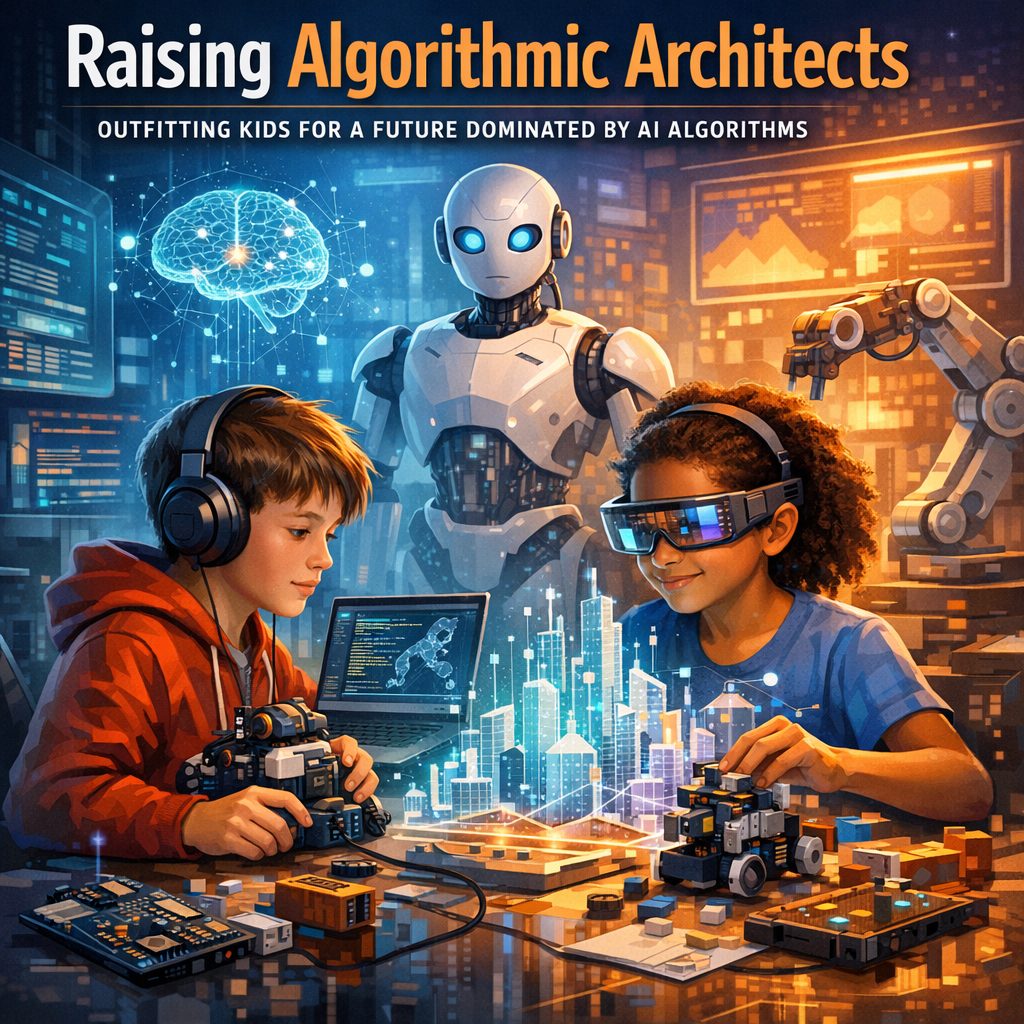
Raising Algorithmic Architects: Outfitting Kids for a Future Dominated by AI Algorithms
Introduction
In an era where artificial intelligence (AI) is radically transforming industries, economies, and daily life, raising children equipped for this digital future is pivotal—especially for families with the means to invest in development opportunities. Today, AI doesn’t just influence cyberspace; its algorithms sculpt how we interact with the world, from personalized shopping experiences to predictive healthcare. For parents who wish to prepare their children for a futurescape where AI is omnipresent, cultivating a unique blend of creativity, critical thinking, and technological fluency is essential.
AI algorithms, in particular, are the building blocks of this digital reformation. These algorithms serve as the silent architects behind systems that learn, predict, and adapt. They spearhead advances in areas such as autonomous vehicles, digital personal assistants, and even algorithmic art, setting the stage for a digital revolution. As these technologies continue to mature, they promise to reshape job markets and demand new skills and ways of thinking.
This dynamic landscape presents both challenges and opportunities for preparing today’s youth for future success. The classic educational paradigms—focused primarily on rote memorization and standardized testing—are losing relevance in the face of an AI-driven world. Parents with the ability to influence and provide for enriching experiences find themselves at the crossroads of choosing paths that foster innovative and adaptable future leaders. Their goal? To cultivate ‘algorithmic architects’ who can navigate, interact with, and ultimately reshape a world powered by AI.
By emphasizing STEM (Science, Technology, Engineering, and Mathematics) education alongside creativity and problem-solving, parents can help children build a foundation that supports algorithmic literacy. Tailored educational experiences, coding camps, and exposure to interactive AI platforms can serve as springboards. Furthermore, integrating ethical discussions on AI’s implications encourages children to develop a broader understanding of technology’s impact on society.
As we unravel how these opportunities can be maximized to develop AI-fluent individuals, parents seeking to outfit their children for an AI-led future will find success in assembling a comprehensive roadmap tailored for such a journey.
Features
Understanding how to train young minds to become future algorithmic architects requires diving deep into educational strategies that equip them with the skills needed in a world dominated by AI. A wealth of professional and academic studies offer insight into how best to achieve this. One significant suggestion originates from an MIT study that underscores the importance of introducing children to coding early on, regarding languages like Python and Scratch, as a means to develop not only computer literacy but also problem-solving and analytical skills.
Additional research emphasizes the integration of AI into educational curricula as a way to deepen understanding and engagement. For example, a study published in the “Journal of Educational Computing Research” highlighted how implementing AI-driven tools in classrooms greatly enhances the learning experience and outcomes. These tools offer personalized feedback, adapting to each student’s pace and learning style, which can be particularly effective for learners in their formative years.
Moreover, fostering an environment that combines arts with STEM—often referred to as STEAM—catalyzes creativity alongside technical prowess. Education expert Howard Gardner, known for his Theory of Multiple Intelligences, suggests that nurturing diverse cognitive skills fosters a more complete development of a child’s capabilities, preparing them for complex problem-solving in multiple contexts. More about this can be explored in Gardner’s work, “Frames of Mind”.
This advanced approach must be balanced with conversations on ethics in AI. A professional consensus in the AI Ethics Journal argues that children should also be taught about the societal impacts of AI, including data privacy and algorithmic bias. Such discussions promote responsible innovation and empathetic consideration, allowing young learners to foresee and navigate the moral intricacies of future technological landscapes.
Conclusion
As parents striving to develop capable algorithmic architects, providing your child with a robust foundation in both technical skills and ethical understanding stands at the forefront. By emphasizing early coding education, integrating STEM with creative educational avenues, and having ongoing conversations about technology’s ethical implications, you can effectively outfit your child for unprecedented opportunities presented by a future dominated by AI algorithms. Investing now in this balanced approach ensures that our children are not just passive consumers of AI technology, but active shapers of their digital destiny.
References
1. MIT Study on Early Coding Education
2. Journal of Educational Computing Research
3. Howard Gardner, “Frames of Mind”
4. AI Ethics Journal
“`

Dominic E. is a passionate filmmaker navigating the exciting intersection of art and science. By day, he delves into the complexities of the human body as a full-time medical writer, meticulously translating intricate medical concepts into accessible and engaging narratives. By night, he explores the boundless realm of cinematic storytelling, crafting narratives that evoke emotion and challenge perspectives. Film Student and Full-time Medical Writer for ContentVendor.com