Unlocking Future Potential: Designing AI-Powered Custom Education Paths for Elite Kids
Introduction
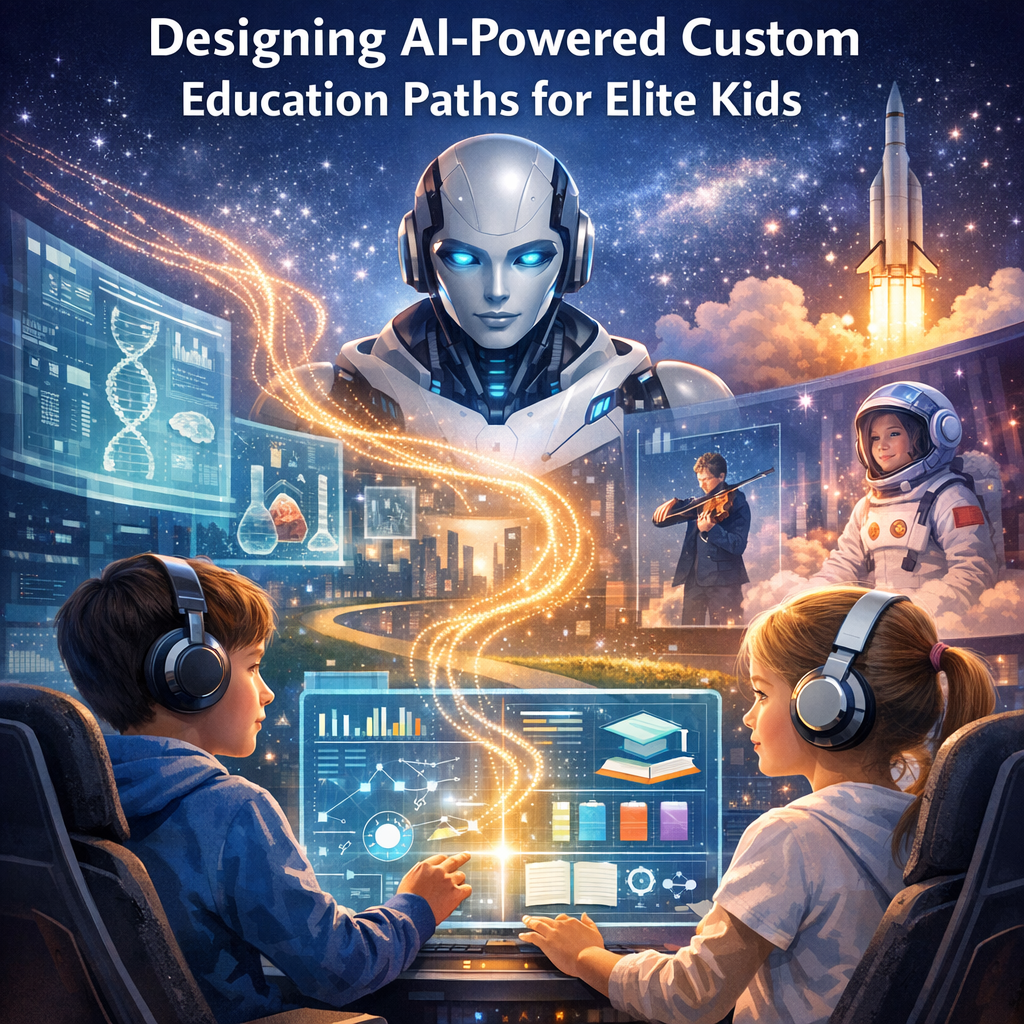
In an era where technology and innovation drive every facet of life, the realm of education too is undergoing a seismic shift, especially for those willing to embrace the luxuries of tailored learning experiences. This shift is particularly appealing to affluent parents who yearn for nothing less than the best for their children. As gatekeepers of opportunity and ambition, they understand that conventional education methods may fall short in addressing the nuanced demands of the future. This is where AI-powered custom education paths come into play, unlocking an elite child’s potential by offering a learning experience that is quirky, engaging, and, most importantly, highly personalized.
An AI-powered education system adapts curricula to meet individual learning styles and paces, taking into account each child’s strengths, weaknesses, interests, and aspirations. Imagine a learning environment where AI identifies a child’s passion for art and integrates it into their mathematics assignments, making every sum come alive through vibrant pictures and shapes. Such an approach not only enhances learning outcomes but cultivates a genuine love for education, laying a strong foundation for lifelong learning and success.
Moreover, as businesses and societies pivot towards a data-driven future, familiarity with platforms powered by AI becomes indispensable. By exposing elite kids to intelligent education systems early in life, parents can ensure their children aren’t just passive observers but active architects of technology, future-proofing their relevance in a world of perpetual change. This innovative learning model helps create thinkers, problem solvers, and leaders who can navigate the complexities of an AI-driven world with confidence and capability.
Furthermore, as these custom education paths flourish, they align with a broader societal shift towards valuing individual talents and nurturing unique abilities over conforming to rigid conventional standards. For affluent families investing in these possibilities, the reward is immense—children who grow up with not just academic proficiency but also emotional and social intelligence, creativity, and a readiness to embrace futuristic challenges.
Features
A growing body of research underscores the significance and promise of AI in crafting tailored educational experiences. A study by the *Journal of Educational Technology & Society* highlights that artificial intelligence in education can significantly enhance student engagement and learning outcomes, providing learners with instant feedback and personalized learning pathways that are virtually impossible to achieve through traditional methods alone. [Enhancing Learning Outcomes via AI](https://www.j-ets.net)
Additionally, according to a report from the *Brookings Institution*, AI in education amplifies the capabilities of both educators and learners by automating mundane tasks, such as grading and scheduling, thereby allowing teachers to focus on more personalized, collaborative, and creative aspects of teaching. This shift not only improves quality but also ensures that high-potential students are never restricted by the pace of their peers. [AI in Education](https://www.brookings.edu)
Furthermore, a study published by *EdTech Magazine* indicates that AI-driven systems can detect patterns in how students learn, predict learning outcomes, and even identify when students are likely to struggle with content before it becomes a significant challenge. This proactive approach can be particularly beneficial for gifted children who require consistent and complex intellectual stimulation to remain engaged and motivated. [AI Detects Learning Patterns](https://edtechmagazine.com)
The *World Economic Forum* also posits that AI’s role will grow in facilitating continuous, adaptive learning—a necessity in a rapidly evolving job landscape where today’s students must adapt to careers that don’t even exist yet. By integrating AI into education, elite children are not only receiving knowledge but acquiring the adaptability crucial for innovative and dynamic environments. [AI and Future Learning](https://www.weforum.org)
AI’s potential in creating individualized educational experiences is not just a vision for the future but a present-day reality supported by empirical evidence. When harnessed correctly, these systems can be driving forces in developing intellect and creativity while breaking the shackles of conventional classroom limitations.
Conclusion
As AI continues to reshape education, it’s crucial to view this as an opportunity to enrich our children’s learning experiences profoundly. For parents of means, the integration of AI-based education systems can be a truly transformative decision. By investing in personalized learning pathways, they not only equip their children for the AI-centric future but also celebrate and enhance their unique talents and interests, paving the way for a lifetime of success and fulfillment.

Dominic E. is a passionate filmmaker navigating the exciting intersection of art and science. By day, he delves into the complexities of the human body as a full-time medical writer, meticulously translating intricate medical concepts into accessible and engaging narratives. By night, he explores the boundless realm of cinematic storytelling, crafting narratives that evoke emotion and challenge perspectives. Film Student and Full-time Medical Writer for ContentVendor.com