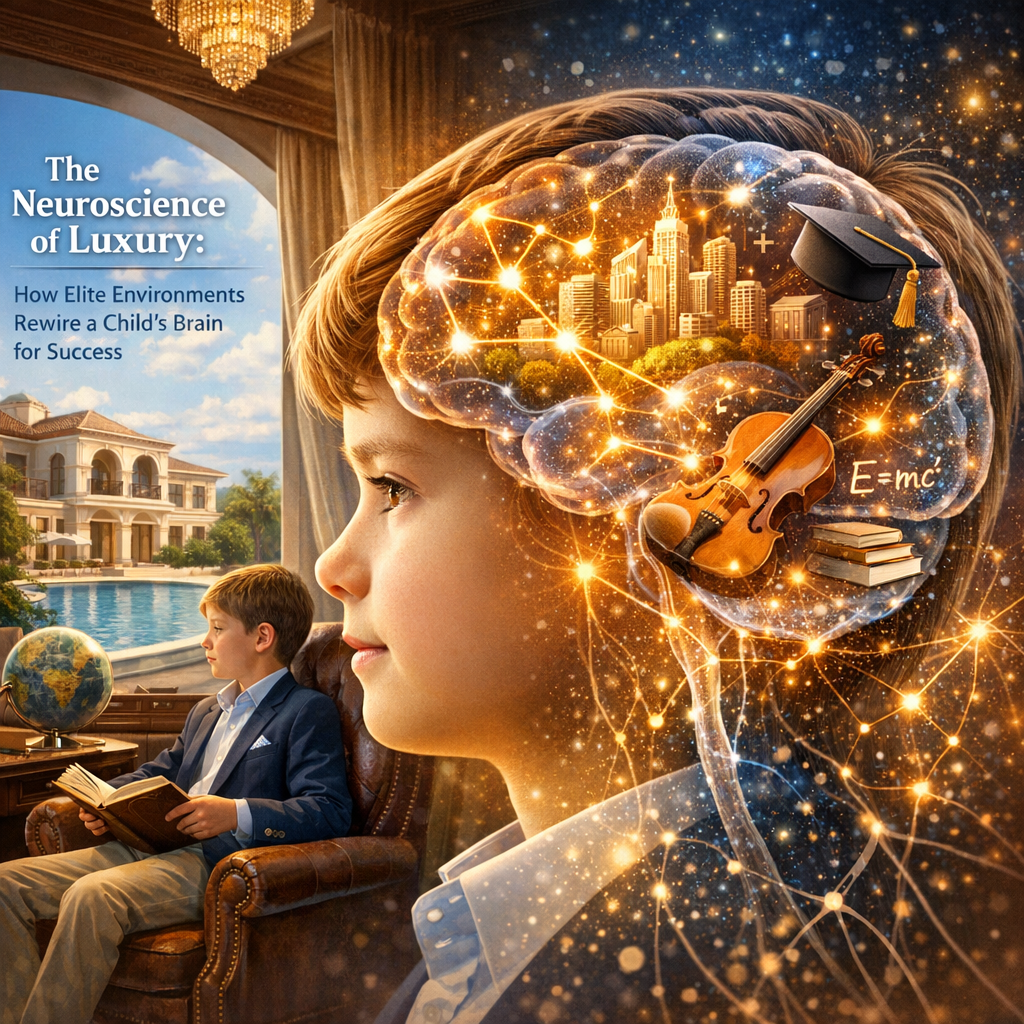
The Neuroscience of Luxury: How Elite Environments Rewire a Child’s Brain for Success
Introduction
In the contemporary world of affluence and privilege, a growing number of parents are investing in creating elite environments for their children. Beyond silk bedding and private tutors, these environments are crafted to provide not just comfort but a significant edge in the neurological development that promises success. The intrigue lies in how these luxury milieus shape a child’s brain, laying pathways for skill acquisition, emotional intelligence, and resilience. As science progressively unveils, the essence of luxury child-rearing extends beyond aesthetics into the profound realms of neuroscience.
Children are inherently impressionable, which means their cognitive, emotional, and social faculties are continually being shaped by their environments. Modern neuroscience emphasizes that a child’s brain is malleable, capable of forming neural connections at an astounding rate. While some argue that extravagant settings could teach entitlement, others suggest that strategically curated high-end environments might uniquely position children to thrive in increasingly complex social and professional landscapes.
Elite environments are not merely about objects but are curated sensory experiences designed to optimize cognitive development and emotional well-being. Fine art, classical music, multilingual nannies, and cutting-edge technology provide stimuli that significantly enrich cognitive growth. Exposure to such multidimensional stimuli is known to strengthen neural pathways, enhancing a child’s ability to absorb and process information. This advantageous early stimulation has the potential to yield benefits in creativity, problem-solving, and critical thinking, translating to success not only academically but also in later life challenges.
Furthermore, these environments promote a broader worldview and cultural fluency that is crucial in today’s global society. Skills such as adaptability and comprehensive thinking become second nature, equipping children to interact with diverse perspectives with grace and intelligence. As we delve deeper into the neuroscience underpinning these effects, we find that they are not merely extrinsic benefits but deeply ingrained attributes of a well-wired and versatile mind.
Features
In discussing the impact of elite environments on a child’s neurological wiring, several scientific studies provide substantial insights. According to research from Harvard University, environments rich in positive stimuli during early childhood are crucial for optimal brain development. Their findings suggest that such stimulative settings foster cognitive abilities and increase a child’s IQ.
Furthermore, a study published in the journal Nature Neuroscience highlights the importance of multisensory experiences in childhood. These experiences are shown to promote synaptogenesis, the formation of synapses between neurons in the brain, which sets the foundation for faster learning and information retention. In particular, the study asserts that environments providing diverse and complex sensory inputs can lead to heightened neural plasticity, allowing children to adapt and learn new skills more efficiently.
Another pertinent study from the University of California, Berkeley, indicates that emotionally supportive luxury environments, characterized by low stress and high emotional security, can positively impact the development of the prefrontal cortex, a brain region responsible for attention, complex planning, and decision-making. Here, the argument is made that luxury environments—which often offer a buffer from stressors—enable children to develop emotional resilience and executive functions critical for leadership roles.
Furthermore, bilingual and multicultural exposures common in luxury settings are known to enhance cognitive flexibility and problem-solving skills, as noted by the Journal of Experimental Child Psychology. These exposures ensure that children are not only primed for innovation and strategic thinking but also equipped with the social skills required to excel in their future endeavors.
Conclusion
In conclusion, the neuroscience behind luxury and its effects on a child’s brain suggests that immersive and enriched environments can indeed prime them for success. By providing not just comfort but also a deeply stimulating milieu, parents of means can foster the development of a well-rounded, adaptable, and intelligent generation poised to tackle the complexities of the future.

Dominic E. is a passionate filmmaker navigating the exciting intersection of art and science. By day, he delves into the complexities of the human body as a full-time medical writer, meticulously translating intricate medical concepts into accessible and engaging narratives. By night, he explores the boundless realm of cinematic storytelling, crafting narratives that evoke emotion and challenge perspectives. Film Student and Full-time Medical Writer for ContentVendor.com