Beyond STEM: The Unexplored Superpowers of the Arts in Cognitive and Emotional Development
In today’s fast-paced world of technology and scientific breakthroughs, STEM (Science, Technology, Engineering, and Mathematics) education has become a central focus. It’s widely believed that STEM equips children with crucial skills for future job markets, playing a pivotal role in shaping young minds. However, for parents deeply interested in the holistic development of their children, it’s essential to look beyond STEM and explore the profound impact of the arts. Often underestimated, the arts have unexplored superpowers significantly contributing to cognitive and emotional development.
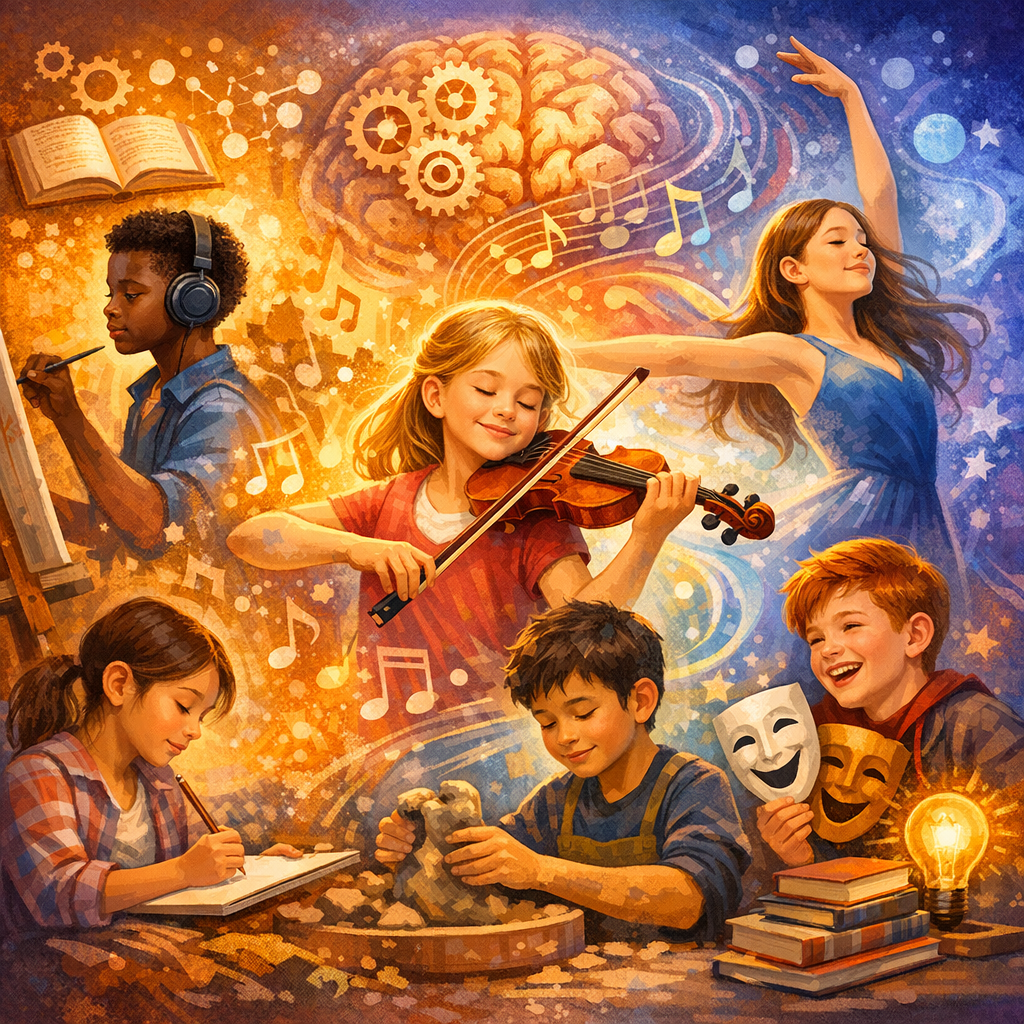
The arts encompass a wide array of activities, from painting, music, and dance to theater and creative writing. Each discipline nurtures creativity, enhances emotional intelligence, and fosters introspection. Children exposed to the arts often display heightened levels of empathy, improved problem-solving skills, and an enhanced ability to express emotions. While STEM focuses on analytical and logical thinking, the arts engage the right brain, fostering imaginative thinking and innovation.
Moreover, introducing your child to the arts offers them a unique platform to explore self-expression. Through the rhythm of music, the brush strokes of painting, or the emotive scripts of drama, children find their voice. They learn to communicate not just through words but through an amalgamation of sounds, gestures, and visuals. This form of communication enhances their social skills and their ability to connect with others on a deeper emotional level.
The benefits extend further into cognitive development. Artistic activities have been shown to strengthen neural connections within the brain, leading to improvements in memory, concentration, and cognitive flexibility. Additionally, the arts encourage children to view problems from multiple perspectives, enhancing their critical thinking abilities. They learn that there can be more than one solution to a problem, a valuable mindset that is crucial for success in any field.
Features:
A growing body of research supports the integration of the arts in education for bolstering cognitive and emotional development. A study published in “Frontiers in Psychology” highlights that engaging in musical activities enhances brain plasticity, crucial for learning and memory ([source](https://www.frontiersin.org/articles/10.3389/fpsyg.2014.00354/full)). Children who participate regularly in music lessons were found to have improved verbal intelligence and an increased ability to process complex auditory information. This study underscores the importance of music in fostering an adaptable brain capable of tackling learning intricacies.
Moreover, a pivotal study from “The Journal of Neuroscience” states that visual arts education boosts the elaboration of the brain’s visual and spatial processing areas ([source](https://www.jneurosci.org/content/37/20/5117)). This development can lead to enhancements in spatial reasoning skills, often translating to improved performance in subjects like mathematics and technical disciplines.
Drama and theater arts have been emphasized in a report by the “National Endowment for the Arts”. The report reveals that students involved in theater programs are more likely to participate in community service and display higher levels of motivation and self-confidence ([source](https://www.arts.gov/)). Theater promotes empathy by allowing children to step into the shoes of different characters, fostering an understanding of diverse perspectives and emotions.
Integrating arts into education does not merely provide a creative outlet but facilitates a deeper understanding of the self and others. The emotional resilience developed through the arts acts as a buffer against life’s challenges, enabling children to navigate complexities with confidence and poise.
Conclusion:
In conclusion, while STEM skills are undeniably vital for future success, the unexplored superpowers of the arts offer an indispensable dimension to your child’s development. The integration of arts with STEM creates a balanced approach known as STEAM (Science, Technology, Engineering, Arts, Mathematics), promoting a well-rounded education. By embracing the arts, you nurture not only cognitive skills but also emotional intelligence, creativity, and resilience in your child. Equip them with these essential tools and watch as they thrive both in school and life.

Dominic E. is a passionate filmmaker navigating the exciting intersection of art and science. By day, he delves into the complexities of the human body as a full-time medical writer, meticulously translating intricate medical concepts into accessible and engaging narratives. By night, he explores the boundless realm of cinematic storytelling, crafting narratives that evoke emotion and challenge perspectives. Film Student and Full-time Medical Writer for ContentVendor.com