Custom AI Curriculum Design for Ultra-Gifted Learners
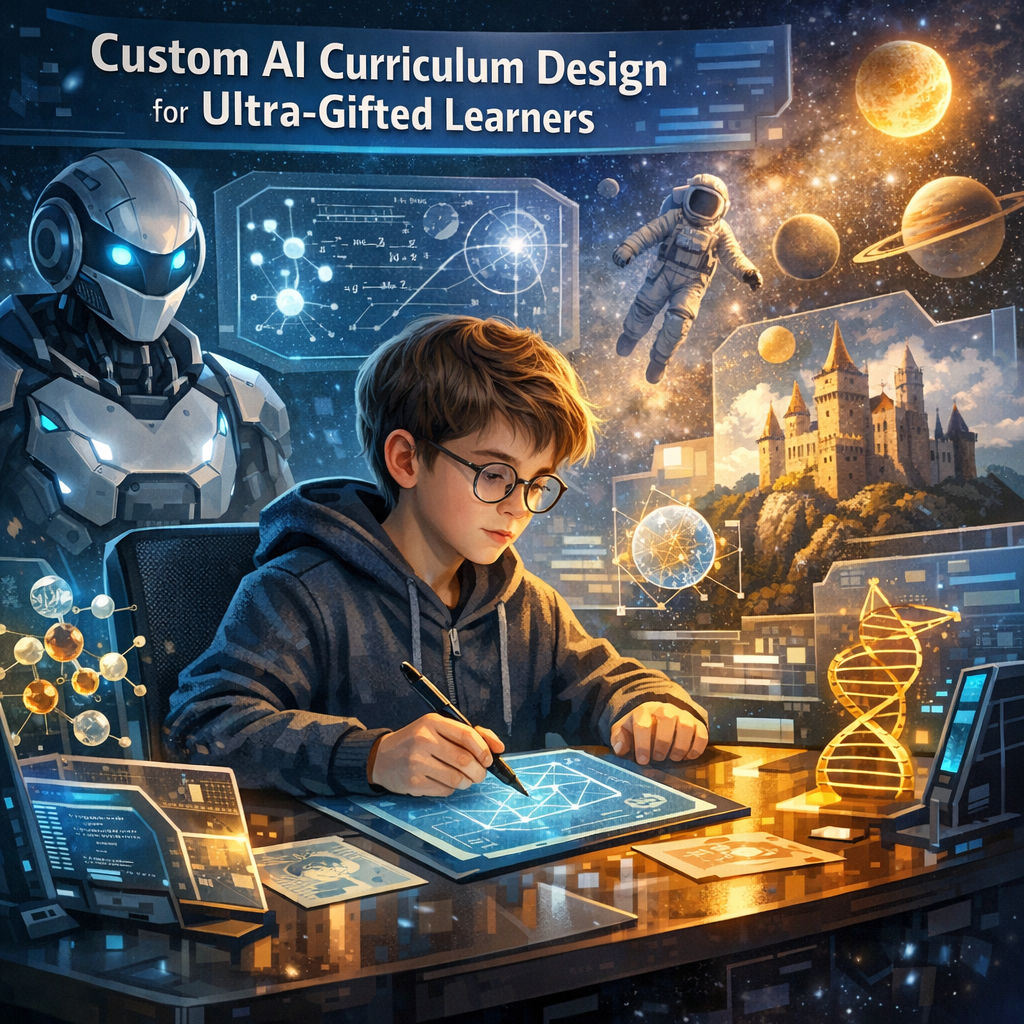
In the contemporary world, the quest for personalized education has reached new heights, especially for ultra-gifted learners—children who demonstrate extraordinary intellectual capabilities. Parents with substantial resources often seek innovative educational approaches that not only nurture but also stimulate their child’s talents. Traditional educational systems, with their one-size-fits-all approach, may not always meet the needs of these prodigious minds. This is where custom AI-driven curriculum design comes into play, offering a revolutionary solution that tailors learning experiences to individual strengths, interests, and learning paces.
The rise of artificial intelligence in education presents a unique opportunity to cater to ultra-gifted learners by developing bespoke learning paths that go beyond conventional curriculum frameworks. These AI-driven platforms can analyze a child’s learning style and progress at an unprecedented scale and granularity, enabling parents and educators to craft a curriculum that is both challenging and engaging. Ultra-gifted children often exhibit asynchronous development, where certain areas, such as mathematics, may far outpace others like social skills. AI technologies can accommodate these discrepancies by accelerating subjects where the child excels and dedicating additional resources to areas that might require more focus.
Modern AI systems, using machine learning algorithms, can assess a child’s existing knowledge and potential learning trajectories, continuously adapting to their evolving needs. This level of customization ensures that ultra-gifted learners are not held back by standardized educational constraints, allowing them to explore advanced topics and complex problem-solving activities much earlier than their peers. Moreover, AI can facilitate interdisciplinary learning, integrating subjects like science, mathematics, and the arts, to foster more holistic intellectual growth.
This innovative approach draws on the latest developments from educational researchers and cognitive scientists. Studies suggest that gifted children benefit immensely from environments that encourage exploration, creativity, and critical thinking rather than rote learning. AI-driven education tools not only provide these enrichment opportunities but also mitigate the risk of disengagement and underachievement often seen in high-potential young learners who are insufficiently challenged.
Features
A substantial body of research underscores the potential benefits that custom AI curriculum design holds for ultra-gifted learners. A pivotal study conducted by the [Stanford University School of Education](https://ed.stanford.edu) highlighted that adaptive learning technologies can significantly enhance educational outcomes for gifted children. According to the research, students who engaged with personalized AI-driven curriculum exhibited an average of a 30% improvement in academic performance compared to those who followed traditional teaching methods.
Furthermore, the [National Association for Gifted Children (NAGC)](https://www.nagc.org) emphasizes the necessity for individualized learning strategies to accommodate the unique cognitive and emotional needs of gifted learners. In its policy brief, NAGC outlines that a lack of tailored educational experiences can lead to boredom and a decline in academic motivation among gifted students. AI-driven curriculum design directly addresses these concerns by offering constantly evolving and adaptive learning pathways that keep pace with a child’s intellectual and emotional development.
Medical studies also shed light on the neurological impacts of custom-tailored education for gifted children. Research published by the [American Psychological Association](https://www.apa.org) revealed that personalized learning experiences contribute to the optimal development of the prefrontal cortex—the area of the brain associated with complex cognitive behavior and decision making. This study suggests that tailored educational strategies can enhance neural growth patterns, thereby supporting the holistic development of ultra-gifted learners.
Moreover, AI technology enables educators to leverage data from various educational assessments and cognitive tests, crafting a robust framework for tailored lesson plans. This not only cultivates an environment where gifted learners thrive but also equips them with critical life skills, including adaptive thinking and emotional intelligence, which are pivotal in today’s fast-paced, ever-changing world.
Conclusion
As AI continues to evolve and integrate with educational methodologies, its potential to transform the learning experiences of ultra-gifted learners becomes ever more apparent. By embracing these cutting-edge technologies, parents can ensure that their children’s prodigious talents are nurtured, challenged, and celebrated within a custom-designed educational framework. This is not just a step forward in educational accessibility and personalization; it is a giant leap toward realizing the full potential of the next generation of creative thinkers and innovators.

Dominic E. is a passionate filmmaker navigating the exciting intersection of art and science. By day, he delves into the complexities of the human body as a full-time medical writer, meticulously translating intricate medical concepts into accessible and engaging narratives. By night, he explores the boundless realm of cinematic storytelling, crafting narratives that evoke emotion and challenge perspectives. Film Student and Full-time Medical Writer for ContentVendor.com