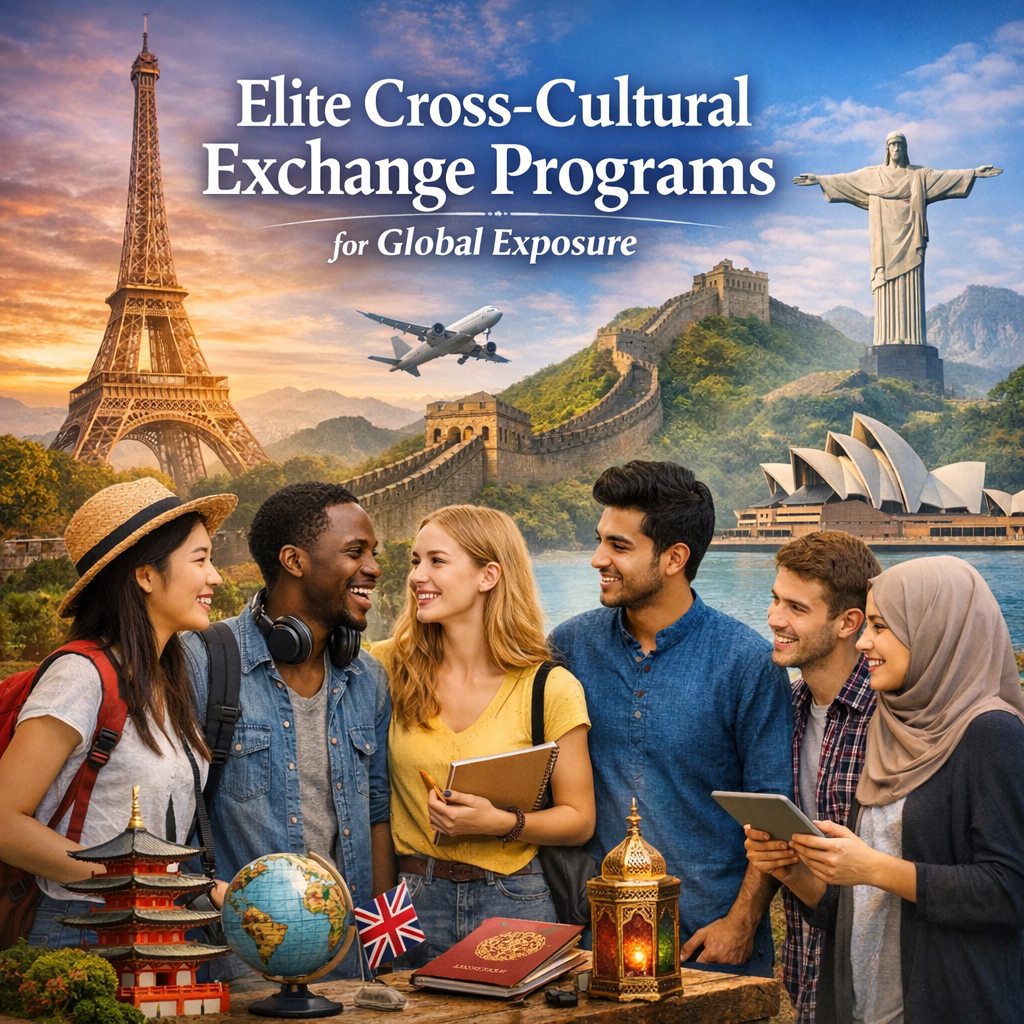
Elite Cross-Cultural Exchange Programs for Global Exposure
In today’s interconnected world, providing children with global exposure is more important than ever. For parents looking to cultivate broad mindsets and adaptable skill sets in their children, elite cross-cultural exchange programs offer unparalleled opportunities. These programs are designed to immerse young learners in diverse cultural environments, fostering not only educational growth but also personal development. They are a powerful tool to prepare the next generation for a globalized society, encouraging them to embrace diversity and understand different cultural nuances from an early age.
The trend towards internationalization in education reflects a growing recognition that tomorrow’s leaders must have a deep understanding of global issues and diverse cultures. In such a context, cross-cultural exchange programs act as a bridge, linking young learners to the world beyond their immediate surroundings. For children from affluent families, who might already have considerable exposure to different cultures through travel, these programs go a step further by providing structured and meaningful intercultural interactions. They are not just tourists but active participants in these cultural environments, engaging in both learning and exchange.
Programs such as these often include partnerships with prestigious international schools or cultural institutions, offering participants access to world-class educational facilities and resources. They expose children to a multiplicity of perspectives, teaching them the invaluable lessons of empathy, adaptability, and critical thinking. By fostering an environment where cultural differences are celebrated, these programs instill a sense of global citizenship and responsibility in young minds. Furthermore, exposure to diverse customs, languages, and worldviews enriches their academic experience, making them more open-minded and inventive thinkers.
For parents who wish to provide their children with experiences that go beyond traditional classroom settings, elite cross-cultural exchange programs are an investment in their future. They align with a broader educational strategy that focuses on developing soft skills, leadership qualities, and an appreciation for diversity, which are crucial in today’s global landscape. As we delve into the professional and academic studies supporting the efficacy of these programs, it becomes evident that they are not just an educational luxury but a necessity for cultivating future leaders.
Features of Elite Cross-Cultural Exchange Programs
Recent studies have highlighted the significant benefits of cross-cultural exchange programs in shaping well-rounded individuals. According to a study conducted by the Institute of International Education ([IIE Global](https://www.iie.org/Research-and-Insights/Publications)), students who engage in cultural exchange programs demonstrate enhanced problem-solving skills and critical thinking abilities compared to their peers. The experience of navigating new cultural terrains forces children to think outside the box and adapt to new challenges, fostering resilience and innovation.
Moreover, research published in the Journal of Experiential Education ([SAGE Journals](https://journals.sagepub.com/home/jee)) indicates that students returning from exchange programs exhibit improved interpersonal skills and cultural sensitivity. They are more likely to appreciate and respect cultural diversity, thanks to firsthand experiences of living and learning in different cultural contexts. This is crucial in developing empathy, a skill valued in both personal relationships and professional settings.
From a psychological perspective, the exposure to diverse cultures in these programs is associated with cognitive flexibility. A study by the University of Limerick ([Research Publications – University of Limerick](https://www.ul.ie/research/publications)) emphasizes that students who participate in exchange programs often perform better on tasks requiring mental agility, as they are accustomed to switching between different cultural frameworks and social norms.
Additionally, the strategic design of these programs caters to language acquisition, a key component of global education. Immersion in a different linguistic environment provides a naturalistic setting for language learning, often resulting in higher proficiency levels. The Center for Applied Linguistics ([CAL](http://www.cal.org/)) reports that students generally achieve greater fluency when they acquire languages through immersion, compared to traditional classroom instruction.
Healthcare professionals also recognize the psychological benefits of cross-cultural exchanges. According to Child and Adolescent Psychiatric Clinics of North America ([ScienceDirect](https://www.sciencedirect.com/journal/child-and-adolescent-psychiatric-clinics-of-north-america)), experiential learning in varied cultural settings can contribute to better emotional regulation and social adaptability among children. This understanding reinforces the view that such programs are more than an educational tool; they are essential in nurturing emotional intelligence and social skills.
Conclusion
Elite cross-cultural exchange programs play a pivotal role in equipping the young elite with the skills necessary to navigate an increasingly complex world. They offer a comprehensive learning experience that goes beyond academic excellence, nurturing empathy, resilience, and global awareness. For parents seeking to cultivate these attributes in their children, investing in such programs is a forward-thinking decision that prepares them for success on both personal and global scales.

Dominic E. is a passionate filmmaker navigating the exciting intersection of art and science. By day, he delves into the complexities of the human body as a full-time medical writer, meticulously translating intricate medical concepts into accessible and engaging narratives. By night, he explores the boundless realm of cinematic storytelling, crafting narratives that evoke emotion and challenge perspectives. Film Student and Full-time Medical Writer for ContentVendor.com