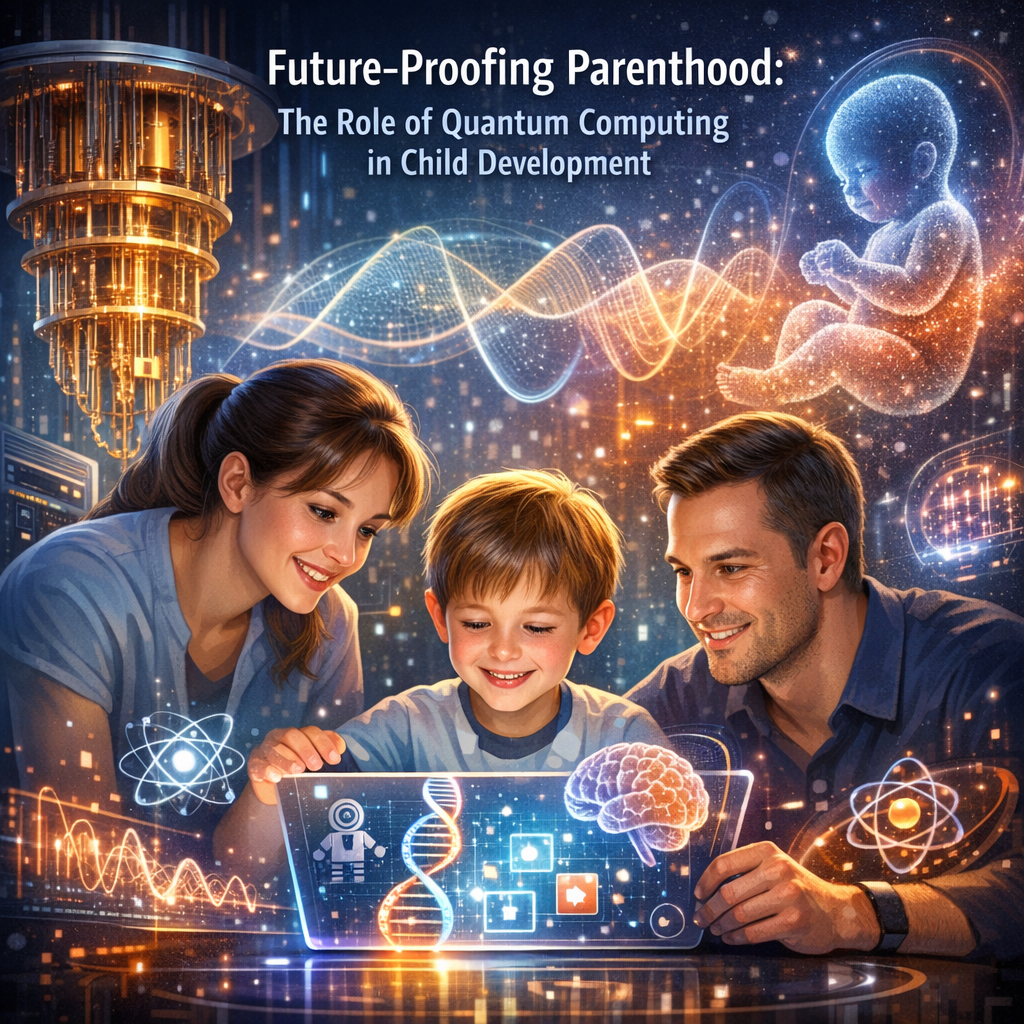
Future-Proofing Parenthood: The Role of Quantum Computing in Child Development
Introduction
In today’s digital era, technology continues to revolutionize every facet of life, from the way we communicate to the methods we employ in education and beyond. As dynamic and powerful technological advancements emerge, they hold the potential to reshape our future in unimaginable ways. Among these breakthroughs, quantum computing stands out as a game-changing frontier. Yet, what is quantum computing, and how could it possibly play a role in parenting and child development? Understanding this could arm parents with tools as futuristic as they are essential.
Quantum computing, unlike classical computing which uses bits as binary units (0s and 1s), leverages quantum bits or ‘qubits.’ These qubits exploit principles of quantum mechanics such as superposition and entanglement, enabling them to exist in multiple states simultaneously. This offers unprecedented computational power, opening doors to solving complex problems faster and with greater precision. As research in quantum computing advances, its potential applications in various fields, including healthcare, finance, and education, are coming into sharper focus.
In the realm of child development, quantum computing could unveil a new era of personalized education. Imagine an educational system that not only adapts to a child’s learning pace but also predicts future learning needs based on intricate data analysis facilitated by quantum algorithms. With the ability to churn through vast amounts of educational data, quantum computing can potentially craft bespoke learning experiences, more attuned to each child’s unique abilities and challenges. Such innovations could redefine educational equity and inclusivity, armoring children with the skills they need for a prosperous future.
Beyond education, quantum computing also holds promise in the early detection and treatment of developmental disorders. By analyzing complex datasets from genetic, neurological, and behavioral studies, quantum computers can expedite the identification of developmental patterns and anomalies. This early insight can lead to timely interventions, enhancing health outcomes for children. As quantum computing continues to evolve, keeping abreast of its implications becomes essential for proactive parents keen on shaping their child’s future amid a rapidly changing technological landscape.
Features
Recent studies underscore the transformative potential of quantum computing in child development. A report by the [Massachusetts Institute of Technology (MIT)](https://news.mit.edu/2020/quantum-computing-education-1027) highlights quantum computing’s role in data analysis, particularly in data-driven fields like genetics and neurology. According to the study, quantum computing’s data-processing capabilities could revolutionize personalized learning. Quantum algorithms can precisely analyze large datasets, identifying subtle patterns that traditional computers may miss. Such patterns are crucial for designing tailored educational curricula that cater to individual strengths and needs, enabling a more effective and personalized learning experience for children.
In healthcare, a study published by [Nature Reviews Genetics](https://www.nature.com/articles/nrg2954) explores quantum computing’s potential in genetic research and diagnostics. The article discusses how quantum computers, with their immense processing power, could accelerate genome sequencing and the analysis of genetic data. This could facilitate the early detection of genetic disorders and developmental anomalies, allowing medical professionals and parents to implement early interventions and personalized treatment plans for children.
Additionally, research from the [University of Toronto’s Quantum Machine Learning Lab](https://www.utoronto.ca/news/quantum-robotics-education) emphasizes the intersection of quantum computing and machine learning in robotics. Robots powered by quantum-driven algorithms could serve as real-time learning companions for children, providing interactive and adaptive educational experiences. The study suggests that these robotic tools can actively engage children in the learning process, boosting motivation and comprehension while fostering a natural affinity for STEM subjects.
These studies highlight the potential for quantum computing to not only enhance the educational experience but also support children’s cognitive and social development. By staying informed about these advancements, parents can leverage cutting-edge tools to provide their children with unparalleled opportunities for growth in a tech-centric world.
Conclusion
The dawn of quantum computing presents a compelling prospect for parents who aspire to future-proof their children’s paths. While still in its developmental phases, this technology promises to enhance educational strategies, provide early insights into health conditions, and tailor experiences to children’s unique needs. By embracing quantum computing’s potential, parents can take proactive steps to prepare their children for success in a rapidly evolving digital landscape.
References
1. [Exploring Quantum Computing in Education and Beyond, Massachusetts Institute of Technology](https://news.mit.edu/2020/quantum-computing-education-1027)
2. [Quantum Computing for Genomics: A New Frontier, Nature Reviews Genetics](https://www.nature.com/articles/nrg2954)
3. [Quantum Robotics in Education: A Comprehensive Overview, University of Toronto](https://www.utoronto.ca/news/quantum-robotics-education)

Dominic E. is a passionate filmmaker navigating the exciting intersection of art and science. By day, he delves into the complexities of the human body as a full-time medical writer, meticulously translating intricate medical concepts into accessible and engaging narratives. By night, he explores the boundless realm of cinematic storytelling, crafting narratives that evoke emotion and challenge perspectives. Film Student and Full-time Medical Writer for ContentVendor.com