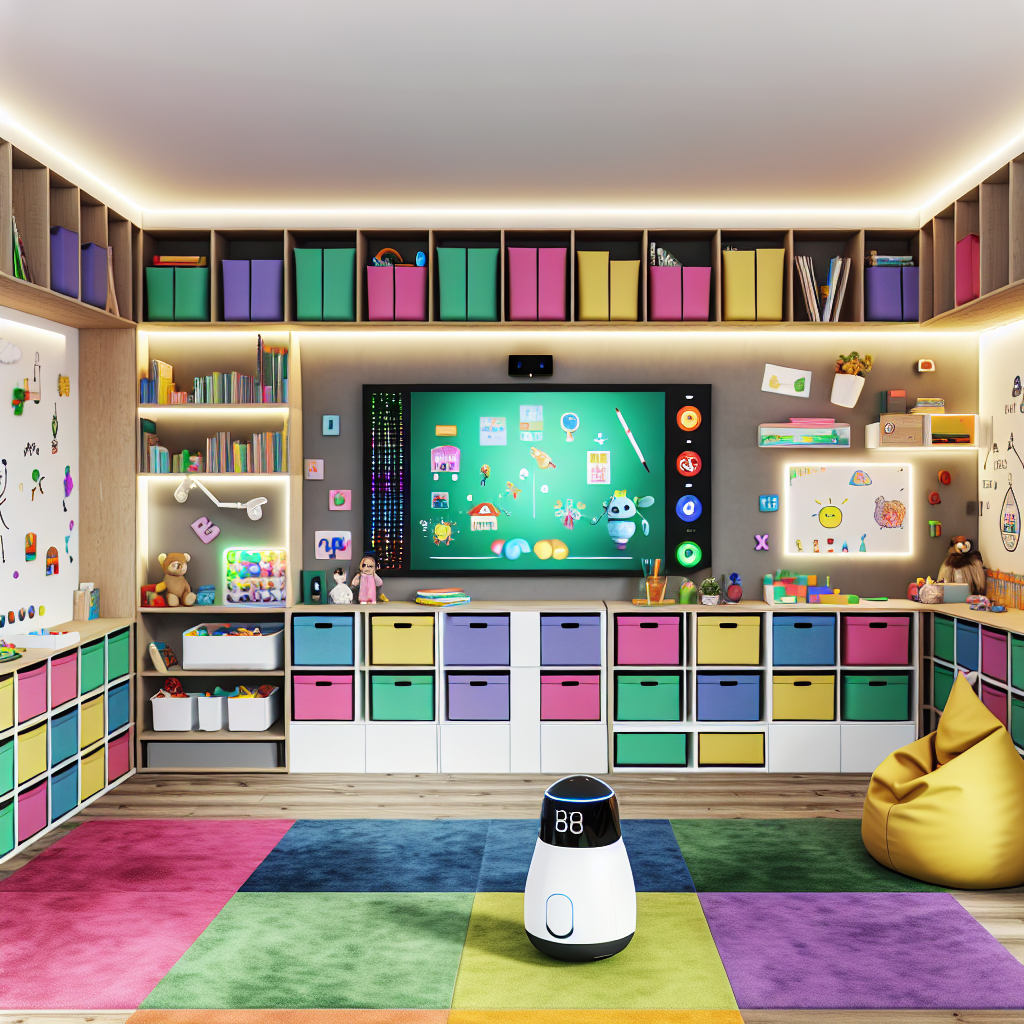
Unlocking Ultra-Premium Parenting: Transformative AI Tools Reshaping Children’s Cognitive Landscapes
In today’s rapidly evolving digital age, the intersection of technology and parenting is a burgeoning field filled with both potential and perplexity. For parents of means who often have access to the latest advancements, the challenge is not just about keeping up but discerning which tools genuinely offer developmental advantages to their children. Among these tools, artificial intelligence (AI) stands out, offering new and innovative ways to enrich children’s cognitive landscapes.
Artificial intelligence is no longer just a futuristic concept; it’s a present reality with tangible benefits. Once confined to sci-fi narratives, AI has emerged as a transformative force in various sectors, including education and child development. For affluent parents seeking to provide their children with every conceivable advantage, AI-powered tools are starting to play a significant role in personalizing and enhancing the learning experience.
Ultra-premium parenting today involves more than just choosing the right schools and extracurricular activities. It involves leveraging advanced technologies to support cognitive and emotional growth. AI offers adaptability in learning experiences, catering to individual needs and learning paces, which is particularly advantageous during the formative years of a child’s life. From adaptive learning platforms that adjust according to the child’s proficiency to AI-driven educational toys that make learning both fun and effective, the scope is vast and exciting.
However, beside the sheer promise of AI lies the necessity for informed decision-making. Choosing the wrong tools or over-reliance on technology can lead to dependency, reduced creativity, or even privacy concerns. Thus, it’s crucial for parents to approach this digital transformation thoughtfully, ensuring that these tools augment rather than replace human interaction and creativity. As affluent parents weigh their choices, understanding the capabilities of AI and knowing which tools are genuinely transformative becomes pivotal. With a careful balance, AI can help enrich a child’s cognitive development, making learning an engaging and prestigious journey.
AI Tools and Studies: Transforming Children’s Cognitive Landscapes
Understanding the profound impact of AI on children’s development necessitates examining various studies and professional insights. Research in cognitive science and educational technologies has highlighted how AI can reshape learning environments, with significant implications for cognitive development.
A notable research area is the use of AI-driven personalized learning platforms. A study published in the International Journal of Artificial Intelligence in Education demonstrated that AI systems could effectively tailor educational content to the child’s individual learning pace and style. The study found that children using AI-based learning tools showed improved retention rates and a deeper understanding of complex subjects compared to traditional learning methods. Source.
Moreover, AI applications in cognitive games have been explored extensively. Research published in the Journal of Educational Psychology indicates that AI-enhanced educational games not only improve critical thinking and problem-solving skills but also stimulate creativity and engagement. These games adapt in real-time, posing new challenges as the child’s proficiency grows, thus maintaining a consistent level of engagement and cognitive stimulation. This adaptability helps in nurturing a growth mindset, which is crucial for lifelong learning. Source.
Another essential aspect is AI’s role in fostering emotional intelligence. Studies, such as those conducted by the University of Cambridge, have examined AI’s capabilities in social robotics, where interactive robots help children learn empathy, cooperation, and emotional regulation. These AI-driven interactions present children with scenarios requiring collaboration and empathy, offering a modern complement to traditional parent-child interactions. Source.
Additionally, there’s growing evidence indicating how AI can assist children with special educational needs (SEN). AI-driven platforms like Brainly and Century Tech offer personalized pathways that accommodate unique learning profiles, providing tailor-made educational interventions that traditional education often lacks.
Conclusion
In conclusion, as AI tools become more sophisticated, they offer unparalleled opportunities for ultra-premium parenting. They possess immense potential to enrich a child’s educational journey, making learning personalized, engaging, and effective. However, the secret lies in striking the right balance—integrating these advanced tools without overshadowing the critical elements of human interaction, creativity, and emotional intelligence. By remaining informed and selective, parents can ensure that AI technology reshapes their children’s cognitive landscapes positively and responsibly.

Dominic E. is a passionate filmmaker navigating the exciting intersection of art and science. By day, he delves into the complexities of the human body as a full-time medical writer, meticulously translating intricate medical concepts into accessible and engaging narratives. By night, he explores the boundless realm of cinematic storytelling, crafting narratives that evoke emotion and challenge perspectives. Film Student and Full-time Medical Writer for ContentVendor.com