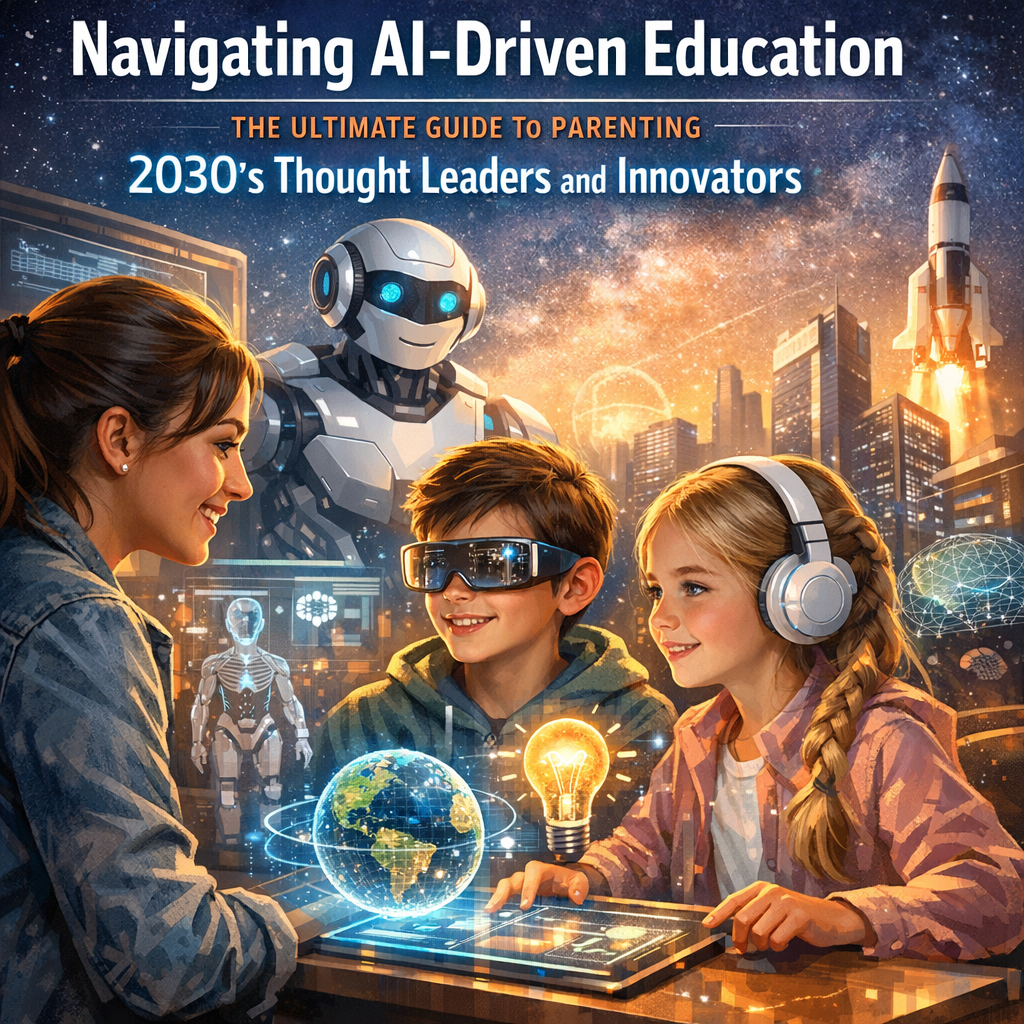
Navigating AI-Driven Education: The Ultimate Guide to Parenting 2030’s Thought Leaders and Innovators
Introduction
As we navigate the rapidly evolving landscape of the 21st century, the intersection of artificial intelligence (AI) and education is proving to be a transformative force. By 2030, today’s tech-savvy children will become the thought leaders and innovators of tomorrow. As a parent, guiding your children through this AI-driven educational paradigm is both an exciting opportunity and a significant responsibility.
The confluence of AI and education is reshaping how children learn, interact, and ultimately, understand the world. Today, AI-driven tools are personalizing learning experiences, adapting lesson materials to meet individual student needs, and even predicting future learning paths. This technological evolution is not merely enhancing traditional education methods but is crafting entirely new educational possibilities. For parents of means, investing in AI-driven education is akin to investing in the future capabilities of their children—equipping them with the skills needed to thrive in an increasingly automated world.
AI’s impact on education is profound, with applications ranging from intelligent tutoring systems that offer immediate feedback and assistance, to sophisticated learning management systems that streamline administrative tasks and allow educators more time to focus on teaching. In elite educational institutions, AI also plays a role in admissions processes, skill proficiency assessments, and providing insights into students’ emotional well-being.
However, this shift requires more than just technological investment; it requires a nuanced understanding of how AI tools can best serve the intellectual and emotional development of children. Ethical considerations, data privacy, and the cultivation of critical thinking skills amidst digital convenience are pressing concerns. As such, today’s parents are tasked with more than simply integrating technology into their children’s education—they must cultivate a balanced and mindful approach to technological advancement.
In this guide to parenting the thought leaders and innovators of 2030, we’ll explore professional and medical studies that underline the potential benefits and drawbacks of AI-driven education and provide strategic insights into helping your child navigate this complex landscape.
Features
At the heart of AI’s potential in education is its ability to deliver personalized, scalable solutions. Research from the International Journal of Artificial Intelligence in Education highlights how AI can tailor educational content to the specific needs of individuals, offering a level of customization that traditional teaching methods cannot. With AI, students can learn at their own pace, revisiting challenging concepts and advancing once they’ve demonstrated mastery. This adaptability is crucial in cultivating independent, self-directed learners capable of leading innovation.
A study conducted by Stanford University’s Graduate School of Education underscores the psychological benefits of AI-driven personalized learning environments. They found that students who engaged with adaptive learning software reported higher levels of motivation and engagement compared to those in traditional learning settings. This suggests that AI has the potential to not only support academic achievement but also foster a genuine love of learning and curiosity essential for future innovators.
Moreover, AI’s role in education isn’t just confined to academic learning. It extends to social-emotional learning (SEL), as demonstrated in a study published in the Journal of Educational Psychology, which emphasizes the importance of integrating SEL with traditional curricula. AI tools can now analyze students’ interactions and offer insights into their emotional states, helping educators and parents intervene when necessary to provide support and guidance in nurturing emotional intelligence—a critical component for successful leadership.
However, despite these advantages, concerns remain. A report from the Tech Policy Lab at the University of Washington raises important ethical questions about data privacy and the potential biases in AI systems. Parents must understand and advocate for transparent data use policies and work closely with educational institutions to ensure that AI tools are implemented ethically and equitably.
Conclusion
The journey to becoming a thought leader and innovator in 2030 begins today with the informed, conscious choices made by parents. By leveraging AI-driven educational tools while addressing the associated challenges and ethical considerations, parents can prepare their children to be not only recipients of knowledge but also creators and leaders in a technologically advanced world. Striking a balance between technology and tradition, and nurturing skills both academic and emotional, will be key to empowering the next generation to shape a better future.
References
1. [International Journal of Artificial Intelligence in Education](https://link.springer.com/journal/40593)
2. [Journal of Educational Psychology](https://www.apa.org/pubs/journals/edu)
3. [Stanford Graduate School of Education](https://ed.stanford.edu)
4. [University of Washington Tech Policy Lab](https://techpolicylab.uw.edu)

Dominic E. is a passionate filmmaker navigating the exciting intersection of art and science. By day, he delves into the complexities of the human body as a full-time medical writer, meticulously translating intricate medical concepts into accessible and engaging narratives. By night, he explores the boundless realm of cinematic storytelling, crafting narratives that evoke emotion and challenge perspectives. Film Student and Full-time Medical Writer for ContentVendor.com