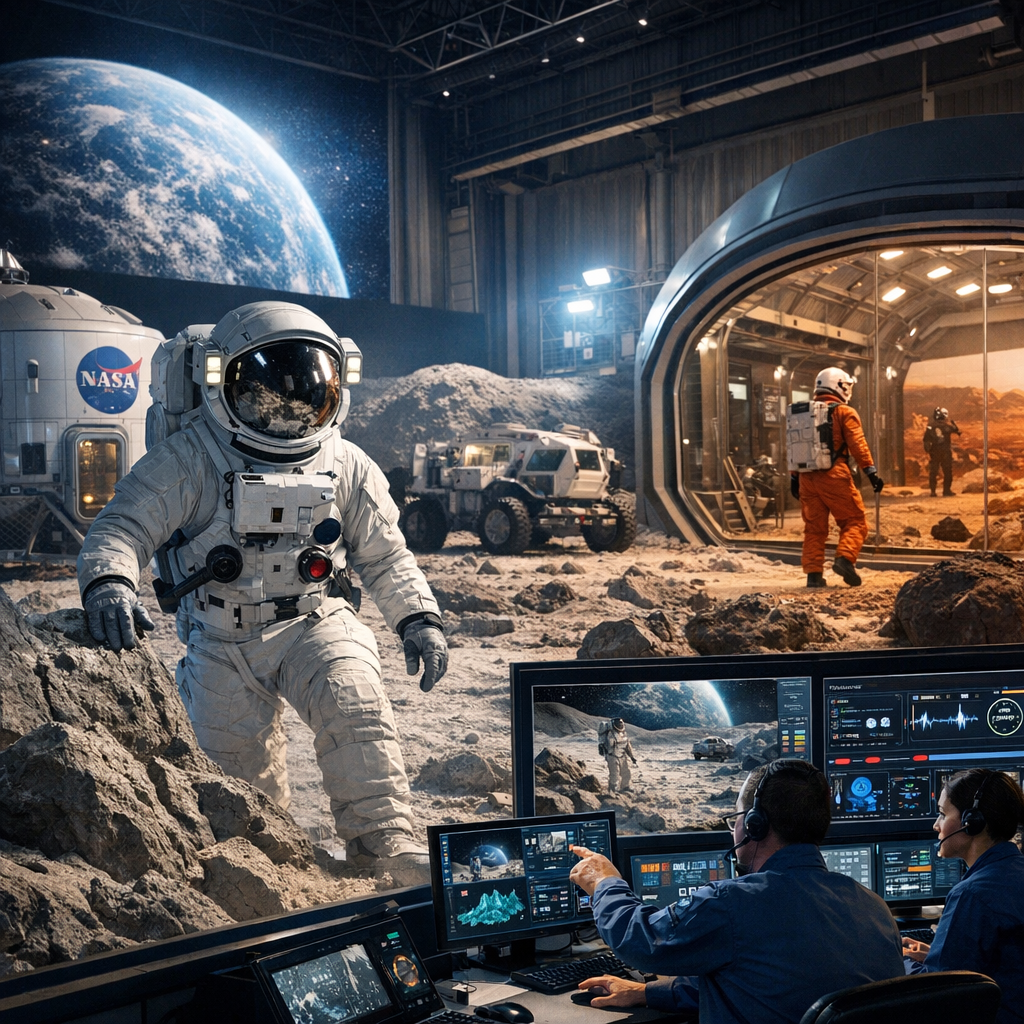
Private Space Simulation Labs for Future Astronaut Training
In the age of unprecedented technological advancements, the frontier of private space travel is becoming an exciting reality. Gone are the days when the cosmos was accessible only to a handful of highly trained government astronauts. Today, the landscape of space exploration is evolving, and even young children can dream of becoming space travelers. This transformation has prompted the growth of an innovative trend: private space simulation labs designed specifically for training future astronauts. As forward-thinking parents of means explore unique opportunities for their children, these labs offer cutting-edge experiences to prepare young minds for the final frontier.
Space travel is no longer a mere dream reserved for science fiction; it is an emerging industry. Companies like SpaceX, Blue Origin, and Virgin Galactic have paved the way for commercial space travel. Consequently, the demand for comprehensive training facilities dedicated to future aviators of the cosmos is soaring. These private simulation labs cater to families interested in providing their children with an education that transcends the terrestrial.
Taking place in highly specialized environments, space simulation labs offer immersive experiences that mimic the conditions of outer space. Participants, often children and teenagers, have the opportunity to train with advanced simulators that replicate the experience of launching a spacecraft, operating in zero-gravity, and conducting extravehicular activities. These labs feature state-of-the-art technology and are staffed by experts, including former astronauts and aerospace engineers, who ensure that every aspect of space travel is covered. Although these experiences can carry a hefty price tag, they are invaluable investments for those who dream of space exploration.
The educational value extends beyond the simulation experiences themselves. Young participants develop a profound understanding of physics, engineering, and life sciences as they learn about the complex challenges of space travel. These labs provide hands-on STEM education, fostering problem-solving skills, teamwork, and critical thinking. At the heart of these simulations is an emphasis on safety and preparing participants for various scenarios that astronauts might encounter in space. Ultimately, these labs are an innovative fusion of education and adventure, offering a glimpse into a future where space travel may become as familiar as international travel.
Features: Understanding the Science and Training Behind Space Simulations
The efficacy of space simulation labs is grounded in a body of evidence that underscores their educational and preparatory value. One significant study conducted by the European Space Agency highlights the impact of simulation-based training on astronauts’ performance and psychological resilience. This study found that astronauts who participated in realistic training scenarios were better prepared for the challenges of space travel, enhancing their confidence and reducing stress during missions. The principles underlying these findings extend to private space simulation labs, where young participants benefit from similar hands-on learning experiences.
In terms of professional insights, notable aerospace organizations such as NASA have long advocated for simulation-based training as an essential part of astronaut preparation. The process includes activities such as microgravity simulations and mission rehearsals. Private space simulation labs emulate these practices by offering advanced technology and guidance from seasoned aerospace professionals. This approach allows children and teenagers to grasp the intricacies of space travel at an early age while building resilience to face unknown challenges with confidence.
Moreover, cognitive studies performed at institutions such as Stanford University emphasize the importance of experiential learning in developing complex cognitive skills. The hands-on nature of space simulation training aligns with these findings by providing young minds the opportunity to engage in active problem-solving and teamwork, critical components of any space mission’s success. These labs focus on nurturing a new generation of critical thinkers and innovators.
In the realm of space travel, maintaining health and fitness is paramount, and these private labs take this into account by including physical training regimens that simulate the physical demands of space missions. According to a medical study published in the ”Aviation, Space, and Environmental Medicine” journal, astronauts undertake tailored fitness programs to maintain cardiovascular health and muscle strength. In private simulation labs, young participants benefit from similar fitness regimens tailored to their age and capabilities, promoting healthy lifestyle habits alongside space education.
Conclusion: A Launchpad for Tomorrow’s Explorers
In conclusion, private space simulation labs represent a bold, forward-thinking initiative for families seeking to invest in their children’s futures. By immersing young participants in meticulously crafted simulations, these labs offer unparalleled opportunities for STEM education, personal growth, and an introduction to the thrilling possibilities of space exploration. As the world moves closer to a future where space travel could be within reach for many, these labs stand as a launchpad for tomorrow’s explorers, cultivating the next generation of scientists, engineers, and astronauts.
References
– [European Space Agency Study on Simulation-Based Training](https://www.esa.int/Science_Exploration/Human_and_Robotic_Exploration/Benefits_of_training_simulations)
– [NASA’s Approach to Simulation Training](https://www.nasa.gov/astronauts/training/index.html)
– [Stanford University Cognitive Research on Experiential Learning](https://www.stanford.edu/research/experiential-learning-and-cognitive-development)
– [“Aviation, Space, and Environmental Medicine” Journal’s Study on Astronaut Fitness](https://www.asma.org/journal)

Dominic E. is a passionate filmmaker navigating the exciting intersection of art and science. By day, he delves into the complexities of the human body as a full-time medical writer, meticulously translating intricate medical concepts into accessible and engaging narratives. By night, he explores the boundless realm of cinematic storytelling, crafting narratives that evoke emotion and challenge perspectives. Film Student and Full-time Medical Writer for ContentVendor.com