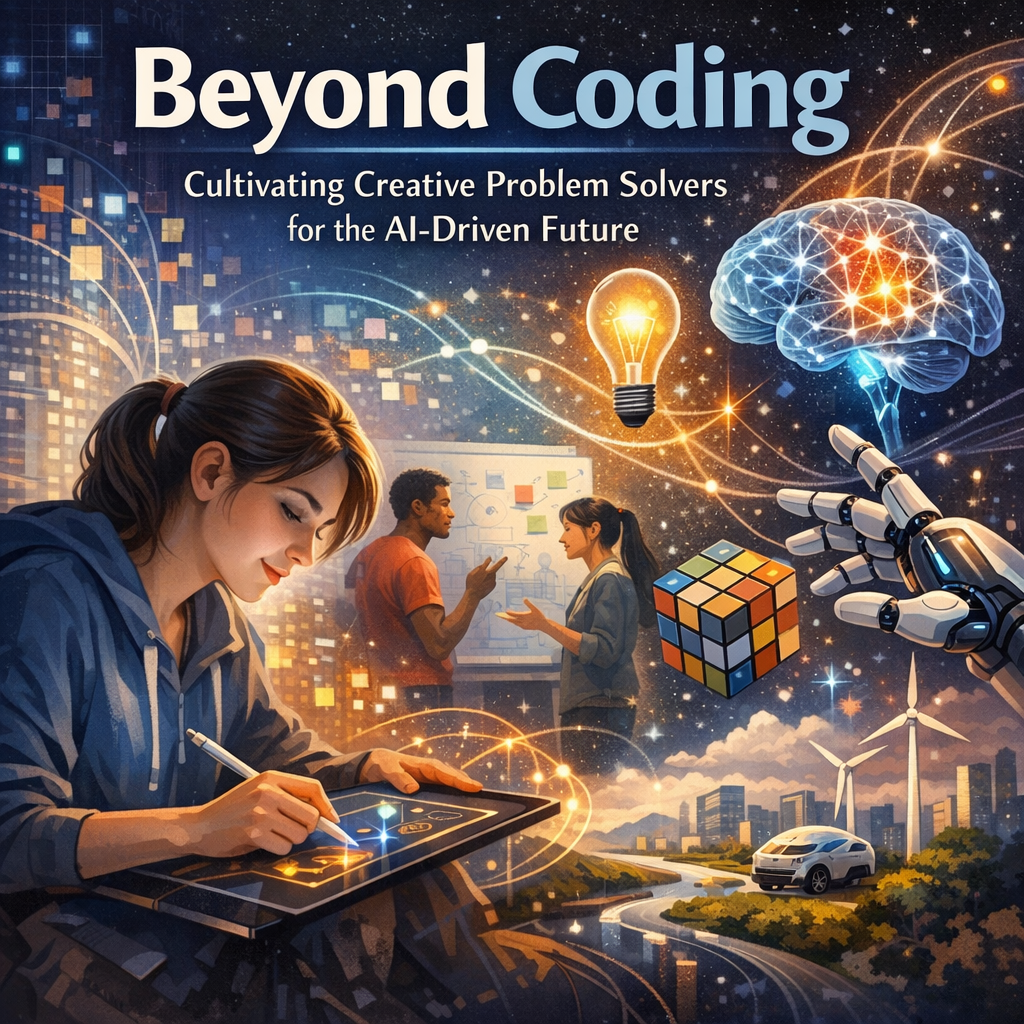
Elevating Childhood: The Science Behind Quantum Learning Environments for Building Future Innovators
Introduction
In today’s rapidly evolving world, providing our children with an education that not only meets the demands of today but anticipates the opportunities of tomorrow is both a necessity and a challenge. As parents, especially those with access to resources that allow for more innovative approaches, there is a keen interest in exploring educational methods that will best prepare children to become the pioneers of the future. Enter Quantum Learning Environments (QLEs), a cutting-edge educational paradigm that combines advanced scientific principles with the latest educational research to create immersive, interactive learning spaces.
The concept of Quantum Learning is derived from the principles of quantum mechanics, which are applied to learning environments to foster creativity, critical thinking, and innovation. Unlike traditional educational systems that emphasize rote memorization and standard curricula, QLEs focus on enhancing individual learning styles and abilities by integrating technology, multisensory activities, and collaborative projects. These environments aim to create holistic learning spaces where children can not only absorb knowledge but apply it in new and inventive ways.
Moreover, with the advent of the digital age, our cognitive frameworks are being continuously shaped by technology and interactive media. A child’s ability to innovate is increasingly tied to their experiences in early education and how these experiences are structured. The integration of technology in learning environments to promote critical skills is no longer a novelty but a necessity. Research indicates that children are most receptive to learning when engaged in active, multisensory environments that cultivate their natural curiosity and creativity.
For parents of means, the ability to provide such tailored educational experiences offers a unique opportunity to amplify their children’s innate potential. By investing in the right tools and environments, these parents are setting the stage for their children to thrive in a future where adaptability, innovation, and technology will reign supreme.
Features
The advantages of adopting Quantum Learning Environments are supported by numerous studies that emphasize the importance of a flexible, responsive approach to education. A pivotal study conducted by the Stanford Graduate School of Education highlights that environments mimicking real-world scenarios help in accelerating problem-solving skills and creativity in children. This study underscores the effectiveness of participatory learning and substantial engagement when traditional barriers between disciplines are dissolved.
Additionally, research published in the “Journal of Educational Psychology” illustrates that children’s executive functions—mental skills including working memory, flexible thinking, and self-control—are more robustly developed in learning environments that emphasize hands-on, interdisciplinary projects. By encouraging experimentation and allowing for failure as a part of learning, QLEs cultivate resilience and innovative thinking.
Moreover, a study by the Massachusetts Institute of Technology (MIT) underscores the importance of active learning environments that employ technology to provide real-time feedback, thus facilitating faster cognitive development. The integration of adaptive learning technologies into the curriculum allows for personalized learning experiences that adapt to the individual child’s pace and style of learning.
Professionals in the field of educational neuroscience suggest that environments rich in novel stimuli enhance neuroplasticity in children, making them more capable of learning new skills and adapting to unpredictable situations. The balance of physical activity, social interaction, and cognitive tasks inherent to QLEs promotes synaptic growth, network connectivity in the brain, and fosters a lifelong love for learning.
For families capable of investing in such education, the imperative becomes clearer: by facilitating access to Quantum Learning Environments, they ensure their children are not only recipients of knowledge but active participants in the creation of new knowledge. In essence, they are nurturing the next generation of thinkers, innovators, and leaders poised to navigate and shape a world in perpetual flux.
Conclusion
Quantum Learning Environments represent the epitome of modern educational strategies, embodying a shift towards a more integrated, technology-enhanced approach. By focusing on individual needs and leveraging advanced scientific principles, these environments equip children to become forward-thinking innovators. For parents with the means to offer such transformative educational experiences, the investment in a child’s future potential is unparalleled, ensuring their ability to lead and succeed in an ever-evolving world.
References:
1. Stanford Graduate School of Education. (n.d.). Learning Environments Research.
[Stanford GSE](https://ed.stanford.edu)
2. “Journal of Educational Psychology”. (n.d.). Enhancing Executive Function through Active Play.
[APA PsycNet](https://www.apa.org/pubs/journals/edu/)
3. Massachusetts Institute of Technology. (n.d.). Active Learning and Cognitive Development.
[MIT Research](https://web.mit.edu)

Dominic E. is a passionate filmmaker navigating the exciting intersection of art and science. By day, he delves into the complexities of the human body as a full-time medical writer, meticulously translating intricate medical concepts into accessible and engaging narratives. By night, he explores the boundless realm of cinematic storytelling, crafting narratives that evoke emotion and challenge perspectives. Film Student and Full-time Medical Writer for ContentVendor.com