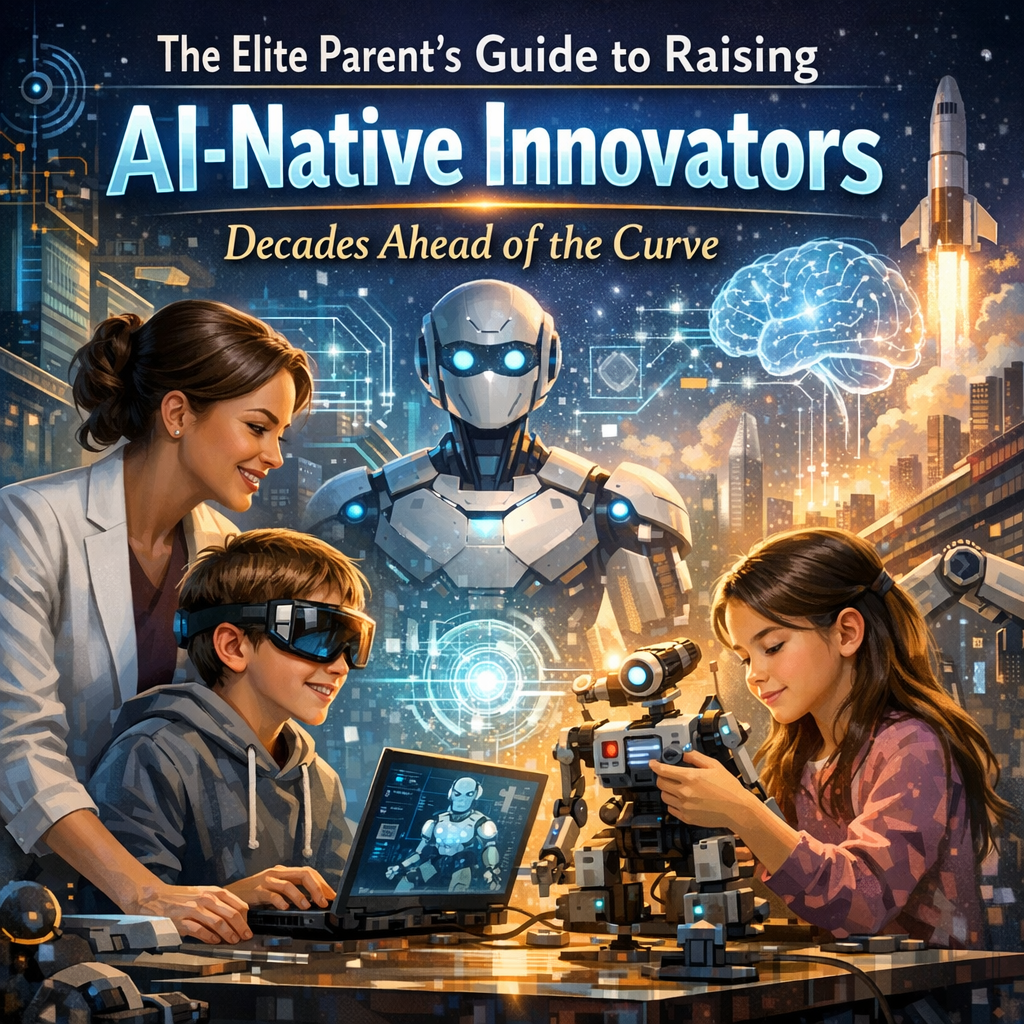
The Elite Parent’s Guide to Raising AI-Native Innovators Decades Ahead of the Curve
In today’s fast-evolving technological landscape, fostering a child’s ability to adapt and thrive in an AI-driven world is no longer an option but a necessity for parents aiming to raise future innovators. The term “AI-native” refers to a generation of children who are growing up in an environment where artificial intelligence is as ubiquitous as the air they breathe. These children will not only use AI tools but will inherently understand and innovate with them. This introduces a unique opportunity for parents of means, those who have access to elite resources, to guide their children in becoming thought leaders and pioneers in an AI-rich future.
The concept of being “decades ahead of the curve” implies that today’s children will set the standard for tomorrow’s technological and societal norms. For elite parents, this means capitalizing on resources such as cutting-edge learning platforms, personalized education models, and exclusive mentorship programs that are currently shaping the next generation of disruptors. Access to such resources allows parents to curate an environment conducive to creativity and critical thinking, vital competencies for any future innovator.
Moreover, nurturing an AI-native innovator requires more than just access to the latest gadgets and technological advancements. It encompasses instilling an understanding of ethics in technology, a sense of responsibility, and an innate curiosity that drives discovery and learning. As the boundary between the digital and physical worlds continually blurs, it is crucial that young ones comprehend the full spectrum of AI’s potential impact—from automation in industries to ethical dilemmas posed by machine decision-making.
Parents, wielding the abilities to afford premier educational tools and experiences, play a pivotal role in shaping their children’s futures. By actively engaging in a child’s learning process and ensuring a balance between digital interaction and human experience, they can help nurture not only skilled technologists but also compassionate innovators who are mindful of the societal ramifications of AI.
Features: Studies and Strategies for Raising AI-Natives
Recent studies explore the benefits of early interaction with AI in educational settings. According to a report by the World Economic Forum, early exposure to AI can significantly improve problem-solving skills and cognitive abilities in young children. The report suggests that incorporating AI-driven educational tools can promote active learning and improve engagement, fostering a deeper interest in technology and innovation. This presents an opportunity for elite parents to introduce their children to AI not merely as users, but as creators. [World Economic Forum](https://www.weforum.org/reports)
Furthermore, research published in the journal “Child Development” demonstrates that age-appropriate coding activities can enhance a child’s computational thinking, which is crucial for AI comprehension. By integrating coding into early education, children can develop a foundational understanding of how AI works, better preparing them for advanced learning opportunities in the future. Access to advanced coding platforms and personalized learning experiences can thus create an advantageous start for children. [Child Development Journal](https://srcd.onlinelibrary.wiley.com/journal/14678624)
Strategically, elite parents are positioned to facilitate mentorship opportunities through exclusive networks, connecting their children with AI experts and innovators. Such mentorship can provide personalized guidance, inspire innovation, and create a practical understanding of applying technology in real-world situations. Additionally, encouraging participation in AI-focused camps and workshops cultivates a collaborative spirit and introduces children to diverse perspectives and ideas, pivotal in nurturing holistic, AI-proficient individuals.
Moreover, fostering a strong ethical foundation is imperative. A study by MIT emphasizes the significance of teaching children about the ethical implications of AI. This underscores the necessity for guided discussions about privacy, security, and ethical usage of technology, ensuring young innovators grow up considering the broader societal impacts of their creations. [MIT Technology Review](https://www.technologyreview.com/)
Conclusion
In cultivating AI-native innovators, elite parents hold the responsibility and opportunity to equip their children with the tools, skills, and ethical perspective necessary for future leadership. An approach that balances technological proficiency with moral responsibility ensures that the next generation will not only advance society but will also conscientiously address the challenges posed by new technological frontiers. By doing so, they invest in a future where their children are not merely participants in an AI-driven world but leading voices driving meaningful and ethical progress.

Dominic E. is a passionate filmmaker navigating the exciting intersection of art and science. By day, he delves into the complexities of the human body as a full-time medical writer, meticulously translating intricate medical concepts into accessible and engaging narratives. By night, he explores the boundless realm of cinematic storytelling, crafting narratives that evoke emotion and challenge perspectives. Film Student and Full-time Medical Writer for ContentVendor.com