Emotional Intelligence Training for Children in a Digitally-Driven World
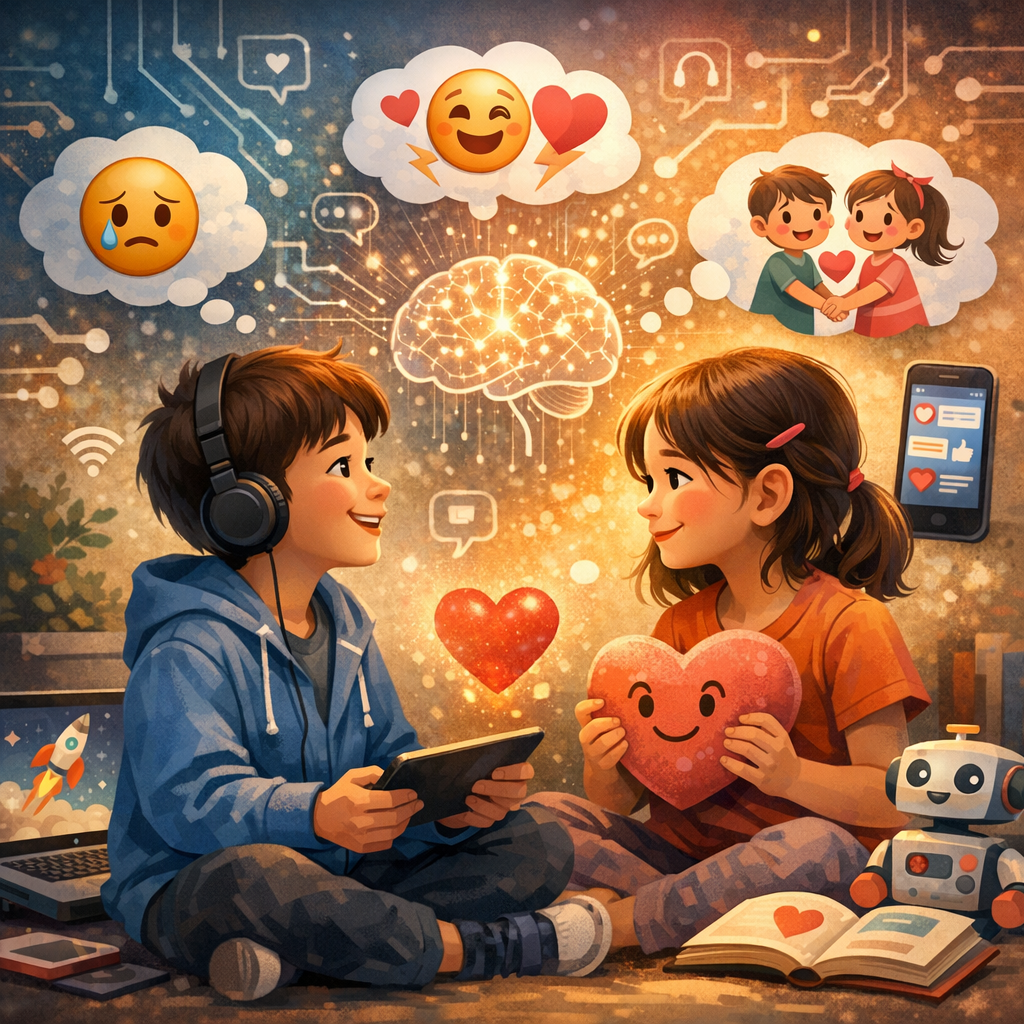
In today’s relentlessly evolving digital landscape, the pressing need for emotional intelligence (EI) in children has become more critical than ever. With the proliferation of smart devices, social media platforms, and virtual interactions, children are growing up disconnected from traditional modes of communication and emotional expression. This hyper-connected yet paradoxically isolating environment poses unique challenges and opportunities for cultivating emotional intelligence in young minds. Parents of means, who often have the resources to invest in their child’s holistic development, are uniquely positioned to lead the charge in nurturing a generation that is not only tech-savvy but emotionally adept and socially responsible.
Emotional intelligence refers to the ability to identify, understand, manage, and express emotions effectively and constructively. In the context of a digitally-driven world, it encompasses digital etiquette, empathy, self-regulation in online interactions, and resilience against cyber-induced stress and anxieties. For today’s children, learning how to navigate the emotional complexities of the digital realm is as crucial as reading or arithmetic.
While technology offers unprecedented educational potentials, it also presents pitfalls like cyberbullying, digital addiction, and the erosion of face-to-face communication skills. These can be detrimental to a child’s emotional development. Therefore, fostering emotional intelligence from an early age is paramount, providing children with the tools they need to manage their emotions and relationships healthily and effectively.
Modern parents are increasingly acknowledging the importance of emotional intelligence as a key predictor of both personal and professional success in adulthood. Recognizing the dire need for EI skills in a world where digital proficiency often overshadows emotional and social competencies, parents are proactively seeking out educational programs and practices that emphasize emotional intelligence alongside academic and digital literacy. In doing so, they are setting the foundation for their children to thrive in a world where the boundaries between physical and digital spheres are continually blurring.
Features: Professional and Medical Studies on Emotional Intelligence
Multiple studies underscore the significance of emotional intelligence as not only an important life skill but also a crucial factor influencing a child’s mental health and social success in the digital age. According to research conducted by Dr. Daniel Goleman, an EI pioneer, children with higher emotional intelligence tend to perform better academically, exhibit improved social behaviors, and possess adept conflict-resolution skills. Goleman posits that integrating emotional learning within the digital native culture can profoundly impact a child’s ability to navigate a technology-centric world [Explore Daniel Goleman’s work on EI](https://www.danielgoleman.info/topics/emotional-intelligence/).
Another compelling study published in the *Journal of Child Development* reveals that children who partake in programs focused on social-emotional learning (SEL) see significant improvements in social skills, reduced anxiety and depression, and enhanced digital citizenship skills— all critical components in adapting to an online world [Read the Journal of Child Development](https://srcd.onlinelibrary.wiley.com/). This highlights the value of SEL curricula in schools and online platforms aimed at ingraining emotional literacy in young learners.
Moreover, a study by the Yale Center for Emotional Intelligence emphasizes that emotional intelligence plays a pivotal role in managing digital interactions and mitigating risks associated with digital use, such as online bullying and negative social comparison. By fostering emotional intelligence through digital resilience programs, children can develop an emotional filter that helps them interpret online experiences more positively and navigate digital spaces with confidence and empathy [ Discover Yale’s findings on EI](https://www.ycei.org/).
With a growing body of evidence supporting emotional intelligence as a core component of child development, the integration of digital emotional intelligence training is garnering increased focus. This coupling provides children with critical skills to decipher emotive cues both online and offline, manage digital interactions with poise, and cultivate a balanced digital life—a holistic approach that parents of means can champion.
Conclusion
As the digital landscape grows increasingly complex and intertwined with daily life, the role of emotional intelligence cannot be overstated. For parents of means who aspire to cultivate emotionally intelligent, competent, and compassionate future leaders, prioritizing emotional intelligence training is an indispensable investment. Nurturing a child’s emotional acuity not only equips them to excel in a digitally-driven world but also ensures that they retain their humanity in an ever-advancing technological era. By emphasizing emotional education alongside digital literacy, parents can empower their children to navigate their digital and emotional landscapes with grace, empathy, and resilience.

Dominic E. is a passionate filmmaker navigating the exciting intersection of art and science. By day, he delves into the complexities of the human body as a full-time medical writer, meticulously translating intricate medical concepts into accessible and engaging narratives. By night, he explores the boundless realm of cinematic storytelling, crafting narratives that evoke emotion and challenge perspectives. Film Student and Full-time Medical Writer for ContentVendor.com