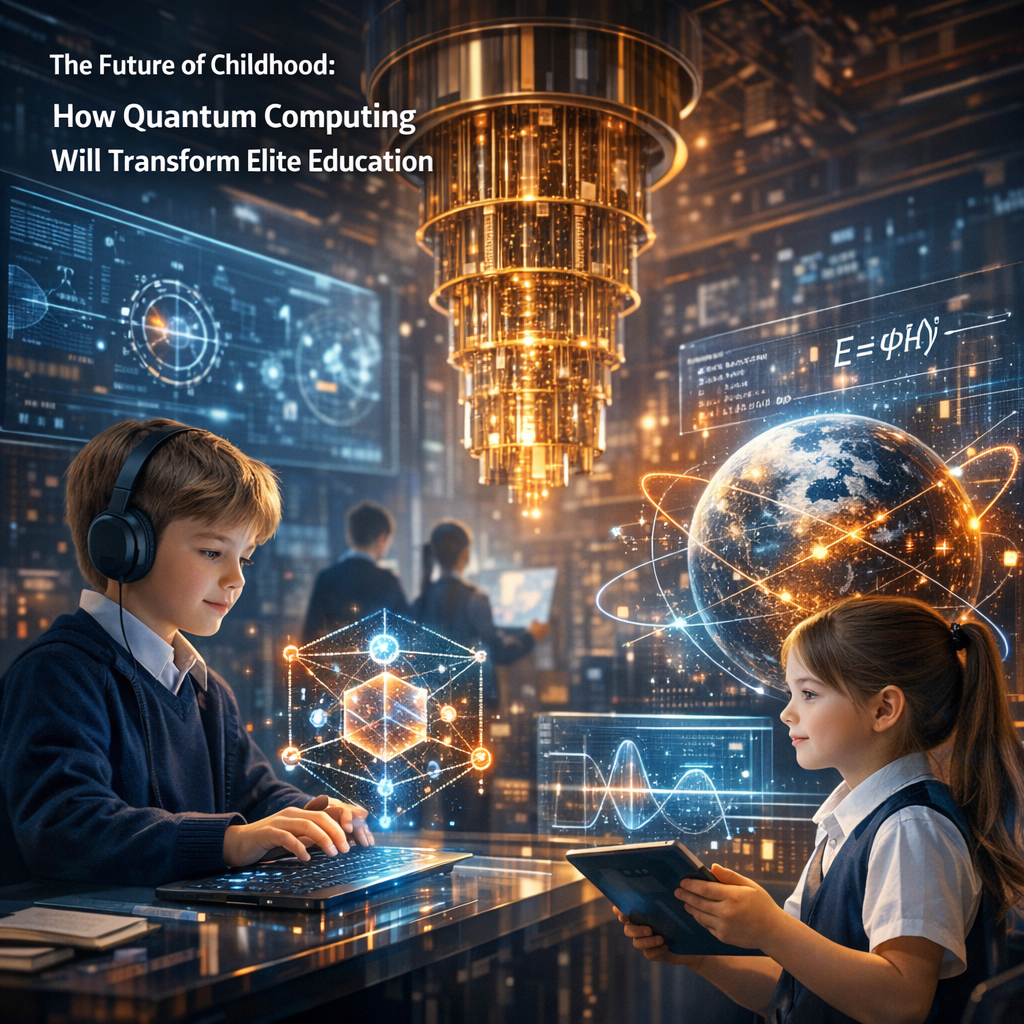
The Future of Childhood: How Quantum Computing Will Transform Elite Education
In the rapidly evolving landscape of education, the introduction of quantum computing stands as a beacon of transformation, particularly in elite educational circles. As parents dedicated to offering the finest opportunities to their children, understanding the influence of quantum computing on future learning environments is essential. Quantum computing, often termed the frontier of technology, operates on principles vastly different from classical computing, enabling it to solve complex problems at unprecedented speeds. Its potential to revolutionize numerous domains, including education, is unparalleled.
Elite educational institutions are the breeding grounds for the next generation of pioneers, leaders, and innovators, and the incorporation of quantum computing into their curricula is inevitable. Imagine a world where children, from a young age, are equipped not only with conventional knowledge but also with the ability to think beyond classical logic. With quantum computers’ ability to process vast data at lightning speeds, students can experience personalized learning models that adapt to their unique pace and style. Such tailored education is expected to nurture creativity, problem-solving skills, and critical thinking—traits imperative for future leadership roles.
Moreover, quantum computing’s role extends beyond mere problem-solving. It’s a tool that can synthesize multiple probabilities simultaneously, offering students a holistic understanding of complex systems, global challenges, and interdisciplinary studies. For parents in pursuit of an unparalleled education for their children, the potential lies not just in the curriculum but in preparing them for a world where quantum mechanics and its applications become ubiquitous.
Institutions are exploring these realms, aware that today’s learners must be adept at navigating a future where quantum computing is interwoven with daily life, affecting sectors from medicine to logistics. As we stand on the cusp of this educational revolution, it fuels both excitement and infinite possibilities for redefining the learning curve, ensuring that children from privileged backgrounds are not only consumers of information but creators in the new quantum age.
Quantum Computing in Education: A Study Perspective
The intersection of quantum computing and education has recently become a significant focus for researchers and futurists. A study by *IBM*, a forefront leader in quantum technology, reveals how quantum computing could reshape various educational paradigms [IBM Research](https://www.ibm.com/quantum-computing/what-is-quantum-computing/). Their research discusses practical implementations such as quantum machine learning and data analysis, crucial for fields like finance and environmental science, thus equipping students with skills essential for future job markets.
Similarly, The International Society for Technology in Education (ISTE) has identified quantum computing as a critical factor in driving future-ready education [ISTE Standards](https://www.iste.org/standards/iste-standards-for-students). Their insights emphasize fostering computational thinking, a vital competence in a quantum-driven world.
Medical studies also offer a glimpse into practical applications. For example, quantum computing is poised to revolutionize personalized medicine [Nature Reviews Drug Discovery](https://www.nature.com/articles/nrd.2017.203). As such, elite educational programs that already emphasize STEM fields may soon integrate quantum strategies into their healthcare education efforts, preparing students for careers that merge technology with personalized health solutions.
The potential benefits of quantum computing extend to addressing socio-economic educational disparities, as discussed in a Harvard Business School working paper [HBS Working Knowledge](https://hbswk.hbs.edu/item/quantum-computing-and-the-future-of-industries). This research explores how even exclusive educational institutions can leverage quantum computing to expand access and offer satellite learning experiences to diverse global populations.
These studies underpin the reality that quantum computing is not a speculative technology of the future but an imminent educational tool. They stress the value of being early adopters, particularly in elite educational settings where resource availability allows for the integration of such advanced technologies into everyday learning frameworks, fostering an environment of cutting-edge academic excellence.
Conclusion
The dawn of quantum computing heralds a new era of elite education, poised to equip children with skills and insights that meet the demands of tomorrow. As this technology transforms learning paradigms, parents have a unique opportunity to ensure their children are at the forefront of educational innovation. By embracing quantum computing, elite institutions and families can prepare today’s students for a world that values creativity, adaptability, and forward thinking—qualities essential for thriving in an increasingly complex and interconnected global society.

Dominic E. is a passionate filmmaker navigating the exciting intersection of art and science. By day, he delves into the complexities of the human body as a full-time medical writer, meticulously translating intricate medical concepts into accessible and engaging narratives. By night, he explores the boundless realm of cinematic storytelling, crafting narratives that evoke emotion and challenge perspectives. Film Student and Full-time Medical Writer for ContentVendor.com