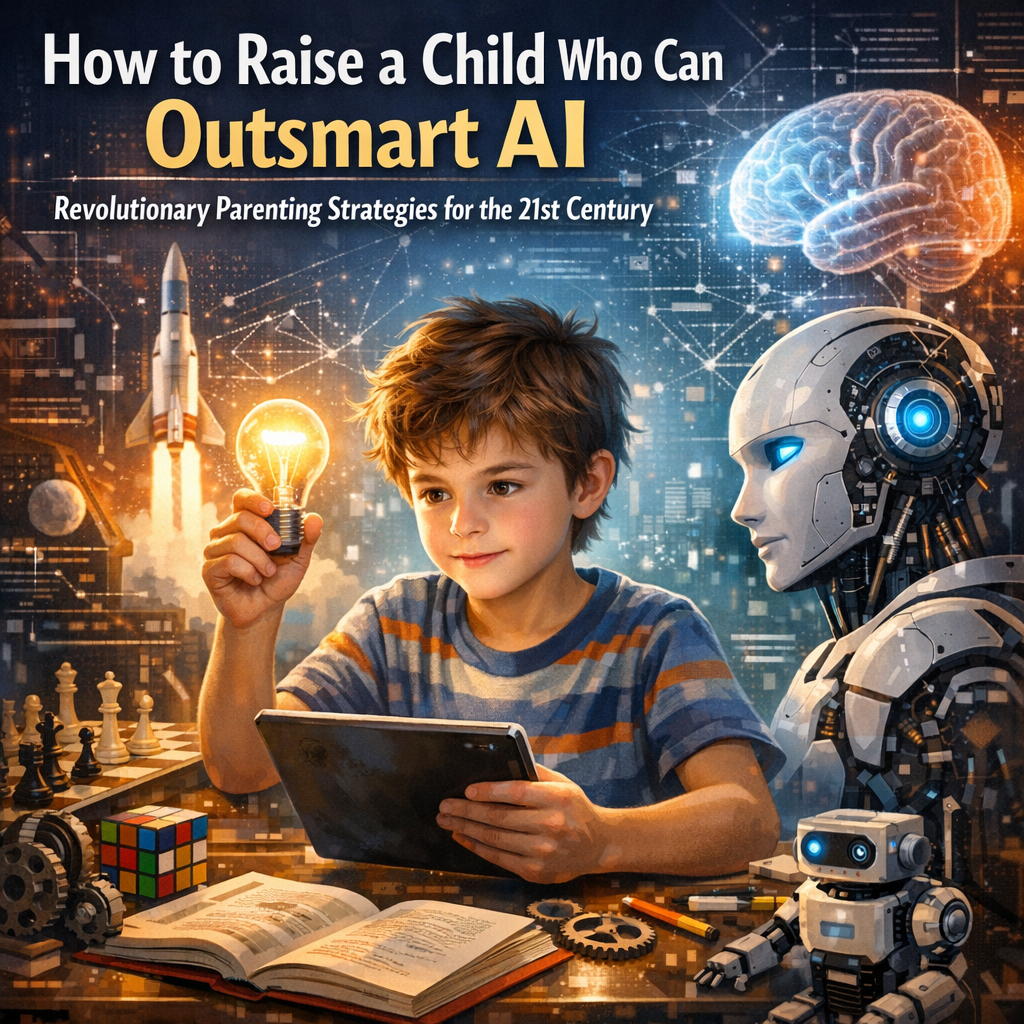
The Future of Parenting: Navigating AI-Augmented Reality Experiences for Elite Child Development
Introduction
In the ever-evolving landscape of parenting, the integration of advanced technologies has introduced a transformative era for child development. Today’s parents of means are uniquely positioned to afford and explore these cutting-edge innovations, notably in the realms of Artificial Intelligence (AI) and Augmented Reality (AR). As the lines between the digital and physical worlds blur, the possibilities for enriching a child’s learning journey and development are unprecedented. Navigating this new territory requires an understanding of both the potential and the challenges associated with AI-AR hybrid experiences.
AI and AR in parenting are reshaping how children perceive and interact with their environment. Artificial Intelligence provides a personalized learning experience, adapting educational content to each child’s preferences and learning pace. With advancements in AI algorithms, these experiences become increasingly sophisticated, ensuring that learning is not only efficient but also engaging.
Augmented Reality, on the other hand, serves to enhance physical surroundings with interactive and immersive digital elements. This technology transforms ordinary experiences into extraordinary adventures, whether through a trip to the park enhanced by virtual scavenger hunts or through educational experiences that bring history to life in real-time.
For parents who value educational excellence and holistic development, AI and AR offer pathways to stimulate young minds and encourage creativity, critical thinking, and emotional growth. However, ensuring a seamless and beneficial integration of these technologies requires careful consideration. Parents must remain informed about the latest developments, actively engage with the content their children consume, and assess the balance between digital interactions and other developmental activities.
As we delve into the significance of AI and AR in elite child development, it becomes essential to explore the professional and medical studies that highlight their efficacy, benefits, and considerations. This understanding not only aids in making informed decisions but also supports a future where technology complements the traditional tenets of parenting.
Features
The convergence of AI and AR in elite child development is supported by an array of studies and professional insights. According to a study conducted by the Child Development Research Institute [CDRI](https://cdrintl.org), AI-enhanced personalized learning significantly improves cognitive skills in early childhood. The research emphasizes that AI technologies, which analyze and adapt to a child’s specific learning style, can lead to superior academic performance and heightened engagement. These AI-driven systems facilitate a bespoke educational journey, much akin to having a personal tutor, catering to each child’s needs while maintaining a dynamic learning environment.
Augmented Reality’s impact is equally promising. A study published by the Journal of Educational Technology [JET](https://educationaltechnologyjournal.com) found that AR applications in schooling considerably increase motivation and interest in learning among children. By superimposing digital information in a child’s real-world environment, AR not only makes learning interactive but also significantly enhances retention and comprehension of complex subjects. Specifically, AR has shown to improve spatial awareness and problem-solving skills, thereby preparing children for multifaceted thinking challenges they may face later in life.
Moreover, a white paper from the Institute for Future Parenting [IFP](https://futureparenting.org) highlights the psychological benefits of AR-enhanced play. The study demonstrates that immersive AR experiences can aid in developing empathy and social skills, by providing simulated scenarios where children navigate complex emotional landscapes. This is particularly valuable in elite environments, where exposure to diverse social situations may not be as frequent.
However, both AI and AR have their challenges. Professionals urge caution regarding over-reliance on these technologies, stressing the importance of balance between digital and real-world interactions. Pediatric psychologists, such as those affiliated with the American Academy of Child and Adolescent Psychiatry [AACAP](https://aacap.org), advocate for guidelines to ensure that AI and AR usage is safe, moderated, and complements traditional learning and play.
Parents are encouraged to engage with technology alongside their children, fostering a shared learning experience that reinforces family bonds while ensuring technological benefits are maximized positively and responsibly.
Conclusion
As parents of means explore AI and AR technologies for their children, understanding their potential and limitations is crucial to fostering an environment that promotes elite development. By staying informed and engaging actively, parents can harness these technologies to enrich their child’s learning experience, preparing them for a future where they are not only adept in technology but also possess a well-rounded skillset. Balancing innovation with traditional parenting values will ensure that these advanced tools are used to enhance, rather than overshadow, the developmental journey.

Dominic E. is a passionate filmmaker navigating the exciting intersection of art and science. By day, he delves into the complexities of the human body as a full-time medical writer, meticulously translating intricate medical concepts into accessible and engaging narratives. By night, he explores the boundless realm of cinematic storytelling, crafting narratives that evoke emotion and challenge perspectives. Film Student and Full-time Medical Writer for ContentVendor.com