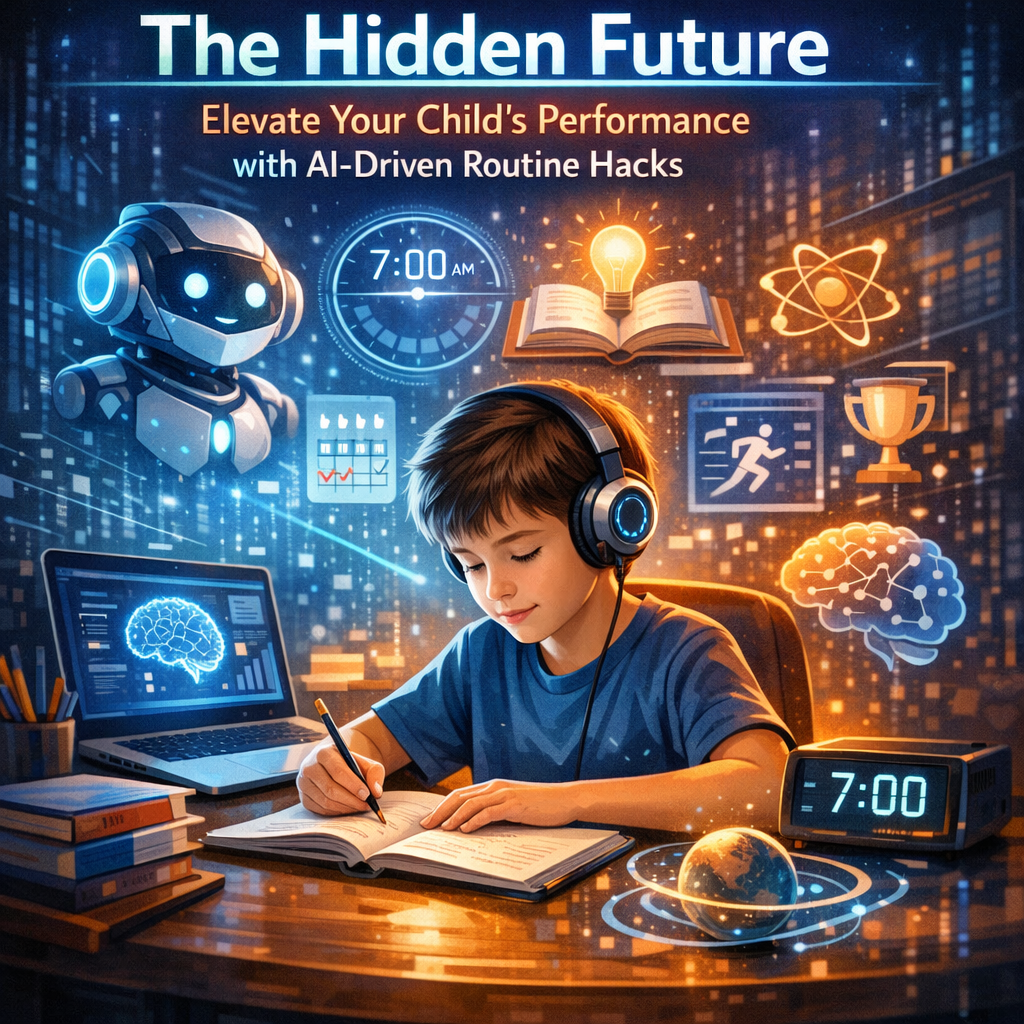
The Hidden Future: Elevate Your Child’s Performance with AI-Driven Routine Hacks
In the fast-evolving landscape of child development, parents are continually seeking innovative ways to enhance their children’s growth and performance. The advent of artificial intelligence (AI) has introduced a revolution in how we can approach this task. Imagine a world where AI doesn’t just augment your child’s academic prowess, but also fosters emotional intelligence, creativity, and overall well-being. Enter AI-driven routine hacks – a cutting-edge approach to invigorating and personalizing a child’s daily life.
The potential AI has on improving the routines of children is largely untapped, yet it promises a future where parents of means can take concerted steps toward optimizing every facet of a child’s day. Gone are the days when AI was merely a futuristic concept; today, it sits within our homes, embedded in devices, ready to assist with customization that transforms mundane routines into engaging experiences. AI can assess a child’s unique learning style and preferences, creating tailored educational content that accompanies structured daily routines with personalization never before possible.
For parents, these AI strategies offer more than just enhanced academic performance. They open doors to cultivating soft skills – empathy, adaptability, and resilience – set within a framework that honors their child’s individuality. Take the morning routine, for instance. AI can draw upon vast data sets to schedule routines that account for key factors such as mood, sleep patterns, and even dietary recommendations, ensuring that children start their days in the best possible condition. The use of AI in curating bedtime stories that are mood-optimized takes evening routines to a new level, preparing them for restful sleep and fueling their subconscious with creativity.
This is a new frontier in child development strategy where traditional parenting meets technology, forging new paths toward exceptional, holistic growth. While ethical considerations of privacy and data use remain, the boundless benefits signify an era of positivity and enhancement. Parents leveraging AI-driven solutions effectively possess the means to elevate their child’s every phase of development with intention and precision.
Features
Several professional and medical studies underscore the profound impacts AI-driven tools can have on children’s routines and overall development. For instance, a study conducted by [MIT Media Lab](https://www.media.mit.edu/projects/ai-in-education/overview/) explored how adaptable AI systems enhance knowledge retention in children by delivering personalized quizzes and interactive exercises that alter based on the child’s performance and engagement levels. This personalized approach ensures that learning remains a dynamic and evolving process that keeps pace with a child’s development.
Furthermore, the integration of AI into children’s exercise routines fosters improved physical health and mental wellness. The University of Alberta’s Faculty of Kinesiology, Sport, and Recreation found that children engaged with AI-driven fitness apps showed increased motivation, longer exercise durations, and improved coordination. By analyzing user data, these apps create balanced routines that target a child’s specific needs, contributing to their physical and emotional health (source: [University of Alberta Study on AI and Physical Activity](https://www.ualberta.ca/kinesiology-sport-recreation/research/index.html)).
AI-driven tools also play a crucial role in managing children’s mental health. According to a research study published in the Journal of Medical Internet Research, AI chatbots designed for children’s mental health provided empathy and support, reducing anxiety and stress, which significantly improved their emotional well-being. These chatbots adapt to a child’s emotional responses, offering a consistent support system that can be particularly beneficial in critical developmental stages (source: [Journal of Medical Internet Research Study on AI and Mental Health](https://www.jmir.org/)).
Finally, in a collaborative study by Stanford University and Carnegie Mellon, it was found that algorithm-driven scheduling tools improved children’s executive functions. By organizing activities that promoted creative expression and critical thinking, these tools significantly boosted the children’s problem-solving abilities and adaptability (source: [Stanford University Study on AI and Executive Functions](https://www.stanford.edu/research/)).
Conclusion
AI has swiftly become a cornerstone in redefining child development strategies. By harmonizing cutting-edge technology with nurturing routines, parents can amplify their child’s educational and emotional development. As the hidden future of parenting unfurls with AI at the helm, there’s an empowering opportunity for parents to personalize and enhance every aspect of their children’s lives. Mindful use of AI-driven tools not only complements parental guidance but stands to shape a generation capable of thriving in an increasingly complex world.

Dominic E. is a passionate filmmaker navigating the exciting intersection of art and science. By day, he delves into the complexities of the human body as a full-time medical writer, meticulously translating intricate medical concepts into accessible and engaging narratives. By night, he explores the boundless realm of cinematic storytelling, crafting narratives that evoke emotion and challenge perspectives. Film Student and Full-time Medical Writer for ContentVendor.com