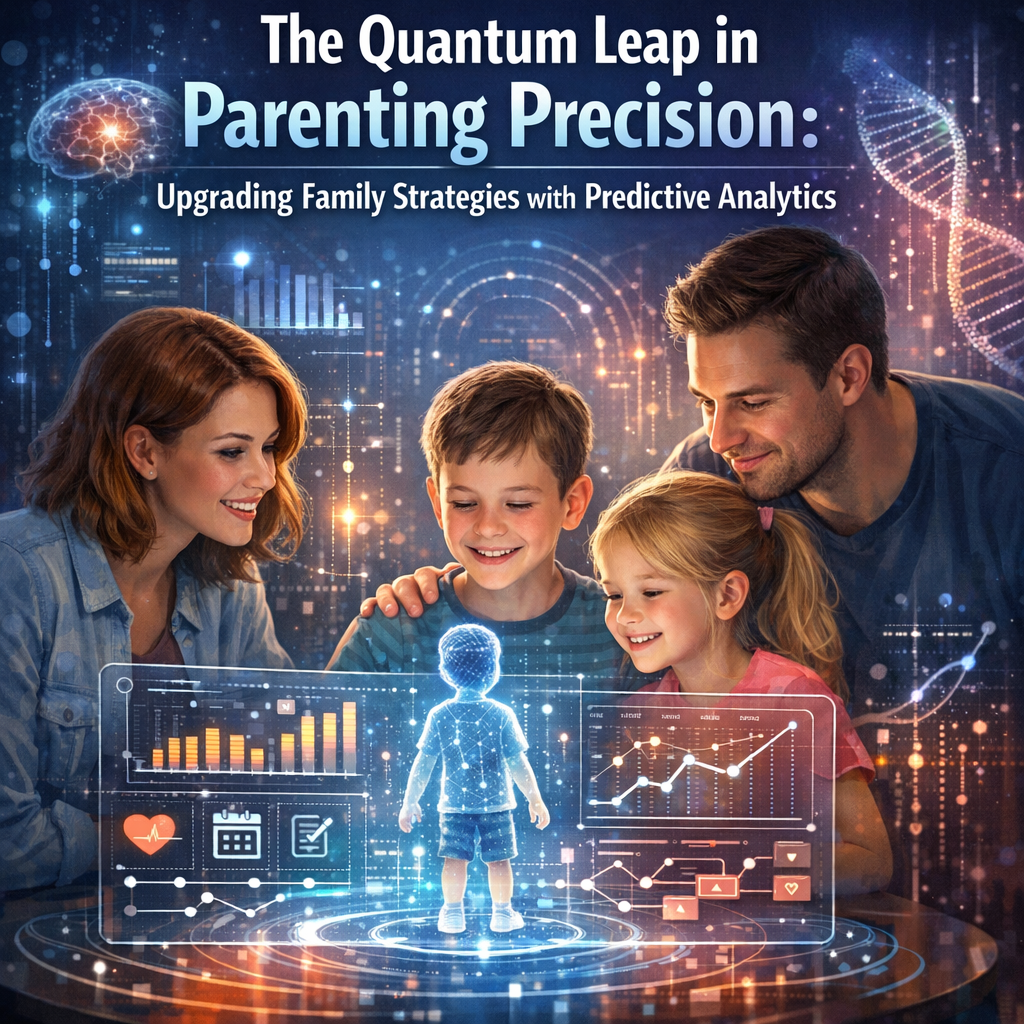
The Quantum Leap in Parenting Precision: Upgrading Family Strategies with Predictive Analytics
Introduction
In today’s rapidly evolving digital landscape, the intersection of technology and daily life has never been more profound. Among the most intriguing developments at the crossroad of innovation and family life is the burgeoning field of predictive analytics. While traditionally associated with business processes and market strategies, predictive analytics is swiftly finding its place in the realm of parenting, offering a groundbreaking shift toward precision parenting.
For parents of means, investing in personalized child-rearing strategies is becoming increasingly viable with the help of data-driven insights. Predictive analytics leverages vast amounts of data from various sources to anticipate future outcomes and trends, providing parents the opportunity to make informed decisions tailored specifically to their child’s potential and needs. Imagine having the foresight to identify the best educational paths, foresee developmental milestones or pitfalls, and even tailor health interventions specifically before concerns arise. The notion of being able to anticipate a child’s academic inclinations, preferred learning styles, or health predispositions might sound like something out of science fiction, but it’s fast becoming a reality.
This novel approach isn’t about replacing intuition and the traditional nurturing aspects of parenting; rather, it’s an enhancement—an upgrade. By harnessing predictive analytics, parents can enrich their strategies with actionable insights supported by scientific methodologies. The aim is to optimize the parenting journey, ensuring that both mundane and significant decisions are empowered by the foresight and clarity that data provides, transforming potentials into certainties. This move to precision in parenting requires not only awareness but an understanding of how to employ this technology effectively in everyday life.
Features
The potential of predictive analytics in parenting is underscored by emerging studies and pilot programs, which illustrate its transformative impact on family strategies. One significant research endeavor in this field is being conducted by the Human Capital and Economic Opportunity Global Working Group, which explores the implications of predictive analytics for not only predicting academic success but also enhancing educational outcomes. This research indicates that early identification and intervention, based on predictive analytics, can lead to improved learning trajectories and subsequent professional achievements, making it a valuable resource for parents planning long-term educational pathways.
Similarly, a study published by the Journal of Pediatrics underlines the benefits of using predictive models to anticipate health issues in children. The research showcases how data-centric methodologies can predict obesity risk factors, the development of allergies, and other health outcomes with significant accuracy. Such insights enable parents to proactively manage their child’s health, employing prevention strategies much earlier than would be possible through traditional medical diagnostics alone. These studies exemplify how predictive analytics can redefine standard health practices by offering an anticipatory perspective that empowers parents to make strategic, informed decisions.
Moreover, institutions like the Child Mind Institute are pioneering the integration of predictive analytics into mental health care. Their initiatives focus on identifying behavioral and emotional trends before they manifest into more complex issues, thus allowing for early interventions that cater to a child’s unique psychological profile. Through such evidence-driven approaches, predictive analytics aids in constructing a robust support system for the child’s mental well-being.
The convergence of these studies articulates a compelling case for predictive analytics in precision parenting. By furnishing parents with actionable data, these insights assist in crafting customized parenting methods that align with the individual child’s characteristics and family goals. They offer a substantive shift from a reactive to a proactive parenting model—one that is both methodical and empathetic.
Conclusion
As the potential of predictive analytics continues to unfold, parents are afforded a powerful tool to navigate the complexities of raising children in the information age. By blending intuitive understanding with advanced data-driven insights, precision parenting heralds a new era of informed decision-making, ensuring that the future is not simply left to chance, but is actively and empathetically shaped.
References
1. Human Capital and Economic Opportunity Global Working Group.
2. Journal of Pediatrics. Predictive Modeling of Health Outcomes.
3. Child Mind Institute. Innovations in Predictive Analytics for Mental Health.

Dominic E. is a passionate filmmaker navigating the exciting intersection of art and science. By day, he delves into the complexities of the human body as a full-time medical writer, meticulously translating intricate medical concepts into accessible and engaging narratives. By night, he explores the boundless realm of cinematic storytelling, crafting narratives that evoke emotion and challenge perspectives. Film Student and Full-time Medical Writer for ContentVendor.com