Redefining Childhood Environments: The Role of Virtual Reality in Developing Elite Life Skills
Introduction
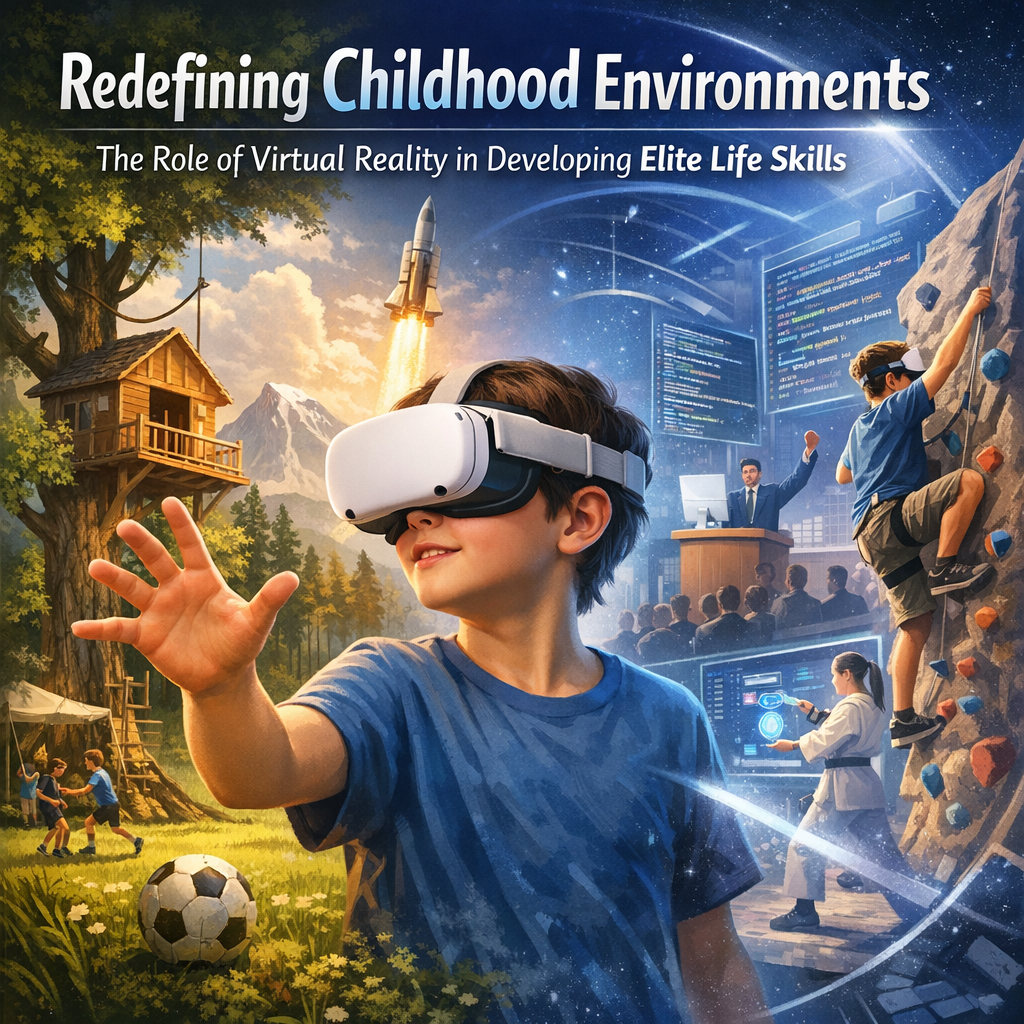
In an era where technology continually reshapes the contours of our lives, the intersection between digital innovation and childhood development presents a unique opportunity for creating enriching environments for young learners. Among the many technological tools available today, Virtual Reality (VR) stands out as a powerful force capable of transforming the way our children learn and grow. For parents who prioritize providing a well-rounded and elite educational experience, VR is redefining what childhood environments can achieve by offering immersive experiences that develop crucial life skills.
Children growing up in affluent environments are afforded numerous opportunities, from private schooling to exclusive extracurricular activities. However, the traditional ways of nurturing talent and honing skills may not fully leverage the potential of their upbringing in this rapidly changing world. This is where VR comes into play. Unlike passive digital experiences like watching videos or playing simple games, VR offers interactive, immersive experiences that can mimic real-life situations. These can help children develop skills such as problem-solving, critical thinking, empathy, and adaptability—skills that are imperative for success in the 21st century.
Additionally, VR transcends the limitations of geographical boundaries and socio-economic constraints, allowing children to explore various cultural, historical, and scientific environments without ever leaving home. For instance, a child can walk through an Egyptian pyramid, experience life in ancient Rome, or even simulate managing a business—all within virtual environments that are both safe and controlled. This transcendent quality not only enriches their learning experience but also sets the stage for developing a global mindset and advanced cognitive abilities at an early age.
As parents who focus on optimizing the learning environment for their children, it’s crucial to understand how VR can be integrated into daily life to foster these elite life skills. By doing so, we prepare our children not just to succeed but to lead in their future endeavors.
Features
Recent studies underline the efficacy of VR in educational settings. According to a study published in the Journal of Educational Technology & Society, VR allows for experiential learning opportunities where children can engage directly with content rather than passively absorbing information. The study highlights how VR creates an emotional connection to the material, making learning experiences more engaging and memorable (Educational Technology & Society).
Furthermore, a research paper in the British Journal of Educational Technology found that VR can significantly aid in the development of spatial skills and problem-solving abilities. These skills are critical for disciplines such as engineering, architecture, and even everyday scenarios where spatial awareness is essential (British Journal of Educational Technology).
Moreover, VR platforms like Google Expeditions and ClassVR are increasingly being used in elite educational settings to expose children to a world of experience. These platforms are crafted to enhance learning in a structured way, focusing on specific learning outcomes that are tailored to the age and developmental stage of each child. They offer an interface through which educators and parents can guide experiences, ensuring that children not only enjoy what they’re doing but learn the necessary life skills that each module aims to teach.
Incorporating VR into educational paradigms also provides developmental psychologists and educators with a wealth of data to analyze how children best learn new skills in virtual environments. Programs like Virtual Reality School utilized at certain advanced institutions track engagement and progress, thereby offering insights that can continually refine and optimize childhood learning environments.
Therefore, the integration of VR technology in children’s learning environments is not merely a trend but represents a significant shift in educational strategies, equipping the next generation with the life skills they need to excel in a dynamic world.
Conclusion
Virtual Reality is more than just a novelty; it’s a transformative educational tool that can redefine childhood environments, developing elite life skills for young learners. By embracing VR, parents can provide their children with unparalleled opportunities for growth, positioning them to not only navigate the complexities of the future but to do so as leaders and innovators. Investing in these virtual landscapes today can yield skilled, versatile thinkers tomorrow—our children’s potential realized through the power of immersive technology.
References
– Educational Technology & Society: Journal of Educational Technology & Society
– British Journal of Educational Technology: British Journal of Educational Technology

Dominic E. is a passionate filmmaker navigating the exciting intersection of art and science. By day, he delves into the complexities of the human body as a full-time medical writer, meticulously translating intricate medical concepts into accessible and engaging narratives. By night, he explores the boundless realm of cinematic storytelling, crafting narratives that evoke emotion and challenge perspectives. Film Student and Full-time Medical Writer for ContentVendor.com