Embracing Luxurious AI Collaborations: Preparing Children for the Autonomous Future
In today’s rapidly evolving world, technology unfolds new horizons daily. Among the most transformative advancements, artificial intelligence (AI) stands out as a key driver of change. While AI permeates industries like finance, healthcare, and transportation, its impact on childhood education and development is profound, particularly for children of parents with means. These technological advances provide unique opportunities to cultivate skills and prepare the next generation for an autonomous future. But what does embracing AI mean for our children’s upbringing, and how can we harness its potential?
Educational Luxuries Beyond Material Goods
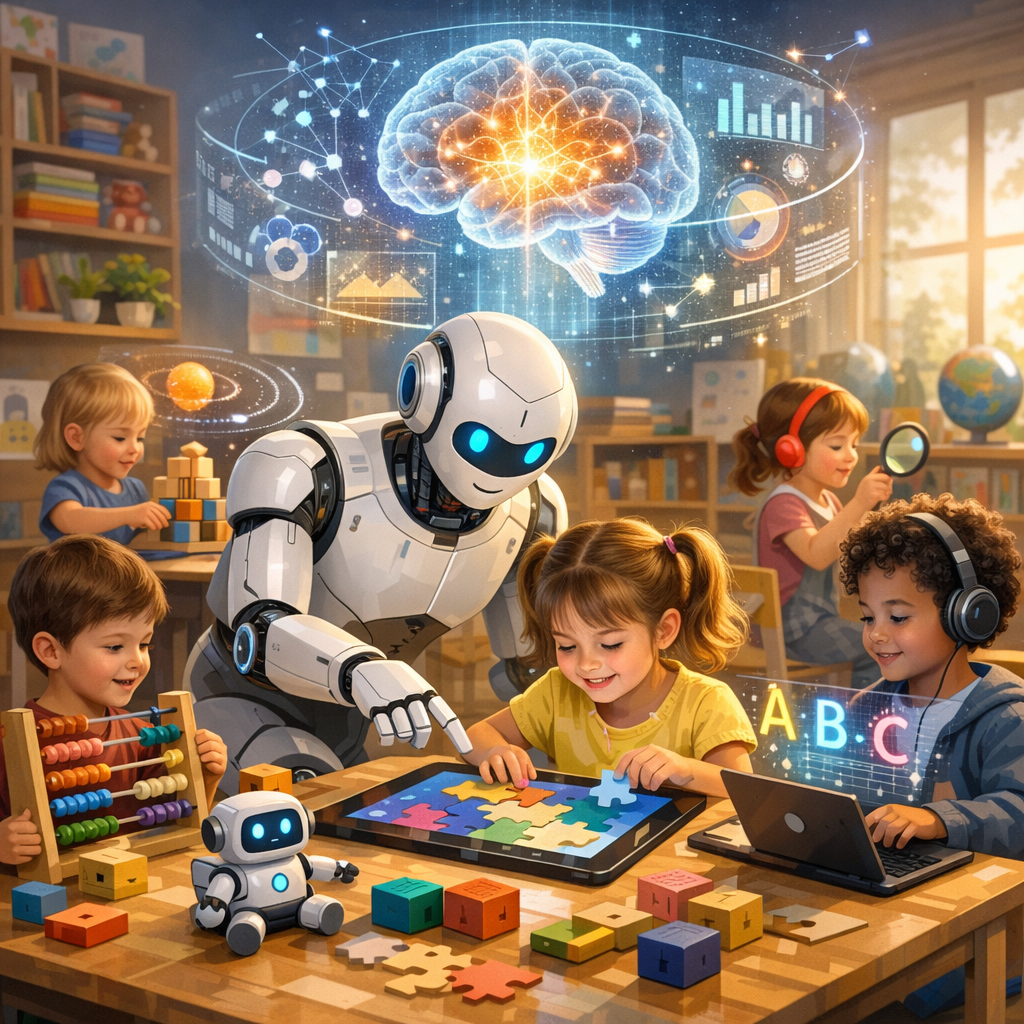
Luxury today transcends material goods; it’s about providing children with the best educational, cultural, and technological experiences. The elite of this new age leverages AI in learning platforms, interactive play, and even personalized education that adapts to a child’s pace and style of learning. From AI-enhanced tutors that provide tailored lessons in subjects ranging from languages to mathematics, to toys that encourage programming and coding, AI infuses play and learning with dynamic and enriching possibilities.
Beyond mere convenience, AI-driven educational tools foster critical thinking, problem-solving, and adaptability. Consider the potential of an AI-powered curriculum that evolves as a child learns, offering personalized challenges and diversifying learning methods far beyond conventional classrooms. These resources equip children with the skills necessary to navigate a world where technology is seamlessly integrated into every facet of life.
Ethical and Educational Considerations
As we prepare our children for a future of autonomous systems, it is essential to cultivate their understanding of these technologies. This involves introducing them to the ethical considerations of AI, ensuring they grow up to be conscientious users and developers of technology, cognizant of privacy, bias, and the social impact of AI decisions. This holistic approach not only prepares children for jobs that do not yet exist but instills a deep appreciation for innovation as a tool for positive change.
By incorporating AI into our children’s lives, we open doors to new forms of creativity, exploration, and expression. As parents, our role extends to guiding them in discerning the wealthy integration of tech tools into their daily lives, ensuring balance and fostering healthy digital habits. In doing so, we prepare them for roles in an infrastructure richly interwoven with AI where they can thrive as informed, ethical, and innovative leaders of tomorrow.
Research-Backed Benefits of AI in Learning
Recent studies underline the critical role AI can play in children’s development. A 2020 report by the Massachusetts Institute of Technology (MIT) found that when children are exposed to AI-assisted learning environments, they demonstrate significant improvements in problem-solving skills and self-directed learning behaviors. Furthermore, research from Stanford University highlights AI’s potential to personalize education, adapting to each student’s unique learning pace and cognitive abilities, thereby enhancing educational equity. This adaptability is especially pertinent as children grow up in a world that increasingly values emotional intelligence, creativity, and critical thinking alongside traditional academic competencies.
Medical studies also shed light on AI’s influence in developmental health. An investigation by the American Academy of Pediatrics found that AI can play a supportive role in identifying developmental disorders early, leading to timely interventions that can significantly impact outcomes for children.
Balancing Technology and Human Interaction
As we integrate AI in educational settings, it is crucial to consider the balanced relationship between technology and human interaction. Experts warn against excessive reliance on screens, advocating for AI tools that complement, rather than replace, personal interaction with educators and peers. This balanced approach ensures that technology serves as an augmentation for, not a substitute for, human experiences.
AI also offers opportunities to explore cultural and artistic fields, fostering creativity and artistic growth through AI-assisted programs that compose music, generate art, and simulate real-life scenarios for immersive learning experiences. These tools offer limitless avenues for children to explore world cultures and artistic expressions, building a broad, inclusive perspective from a young age.
Conclusion
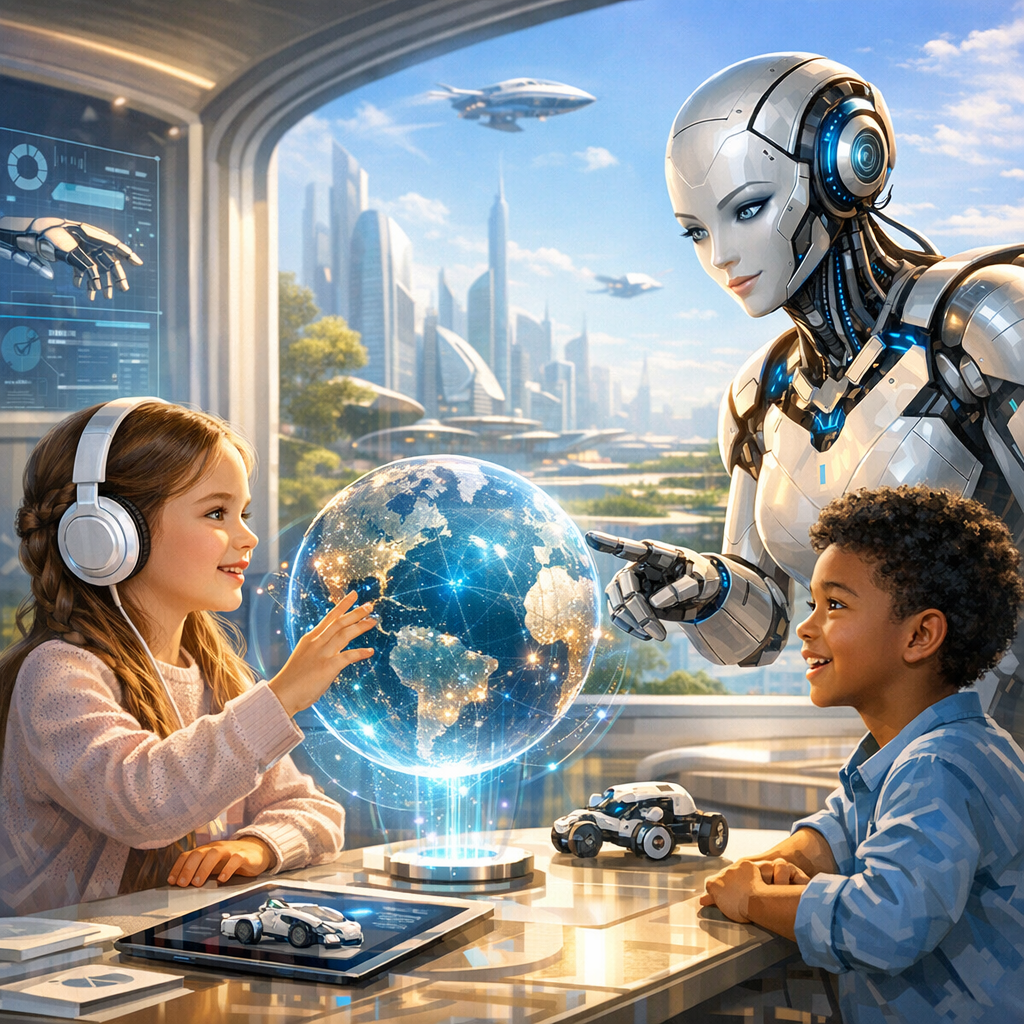
As we prepare our children to step into a world dominated by autonomous systems, embracing AI is not just beneficial—it’s imperative. By exposing children to intelligent tools and ethical considerations from an early age, we empower them to become the socially responsible, innovative leaders of tomorrow. Embracing luxurious AI collaborations ensures that our children not only keep pace with the technological tide but ride it with skill, confidence, and purpose.
References
– [MIT Study](https://www.media.mit.edu/projects/AI-education/overview/)
– [Stanford Research](https://news.stanford.edu/2020/09/12/ai-personalizes-learning/)
– [AAP Study](https://pediatrics.aappublications.org/content/145/5/e20193623)

Dominic E. is a passionate filmmaker navigating the exciting intersection of art and science. By day, he delves into the complexities of the human body as a full-time medical writer, meticulously translating intricate medical concepts into accessible and engaging narratives. By night, he explores the boundless realm of cinematic storytelling, crafting narratives that evoke emotion and challenge perspectives. Film Student and Full-time Medical Writer for ContentVendor.com